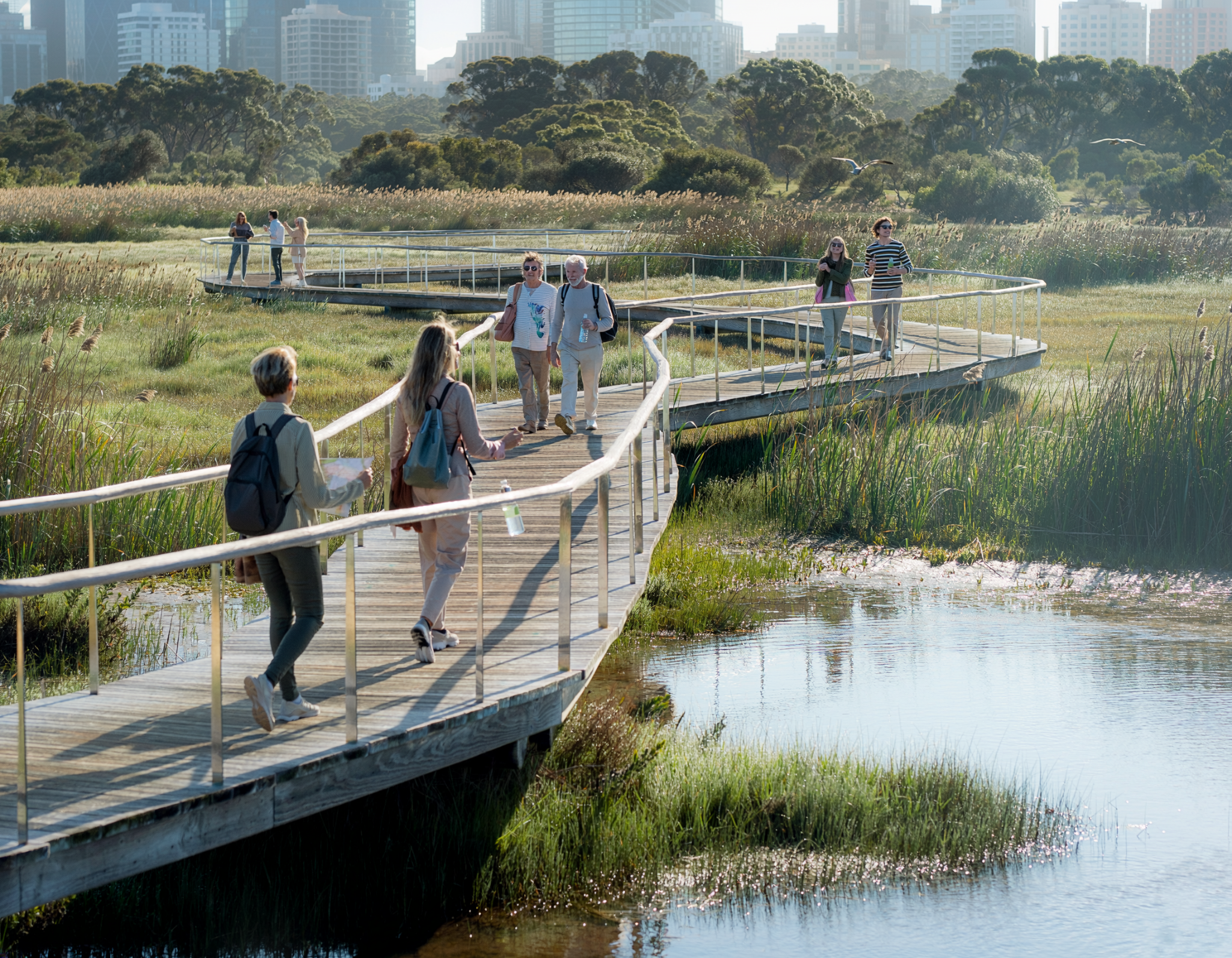
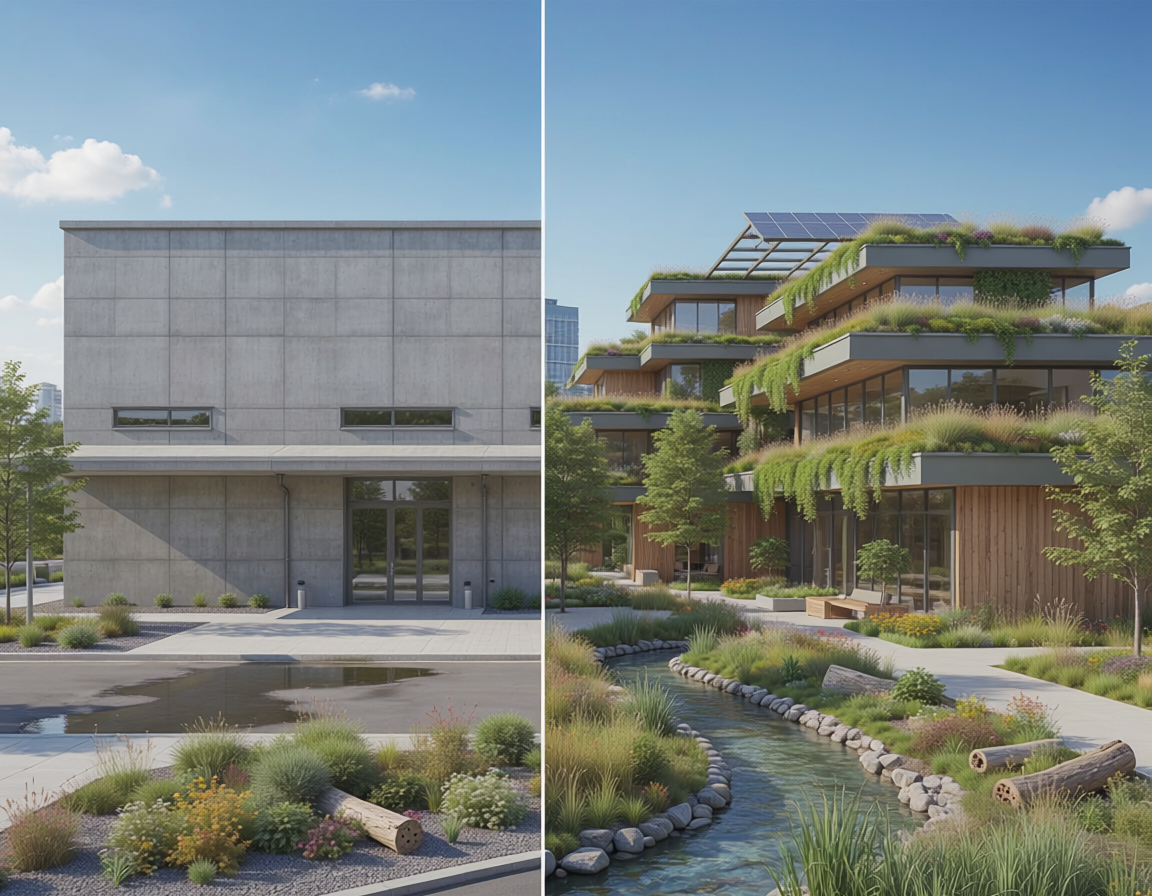
The integration of nature-based solutions into the built environment expands the potential for economic opportunities and green jobs across urban landscapes. This economic shift transforms standard municipal design by establishing new workforce sectors dedicated to the development, management, and scientific monitoring of urban ecosystems. By deploying ecological infrastructure, municipalities can foster multi-tiered employment pipelines that support both specialized technical roles and accessible entry-level labor. Consequently, these structural adaptations bolster urban climate resilience while generating long-term financial returns and diversified income models within local communities. Ultimately, cross-border collaborative research and specialized knowledge networks serve as vital catalysts for accelerating these sustainable workforce transformations.

The alignment of structural engineering with ecological sustainability is fundamentally reshaping the contemporary built environment. Historically, urban development prioritized gray infrastructure—such as extensive concrete drainage systems, asphalt road networks, and conventional industrial real estate—which frequently exacerbated environmental degradation. However, the modern transition toward green and blue infrastructure (GBI) and Nature-Based Solutions (NbS) introduces an innovative paradigm where urban spaces double as functional ecosystems (RATH, 2023). This systemic overhaul expands the potential for economic opportunities and green jobs, transforming the construction, landscape architecture, and municipal management sectors into primary engines for localized, sustainable economic growth (Chausson et al., 2024; Migliaccio, 2023).
Labor Diversification and Multifunctional Economic Benefits
Unlike conventional grey infrastructure projects, which typically offer isolated, short-term labor contracts, the deployment of NbS in urban centers creates resilient, long-term employment matrices. Well-designed ecological interventions require a diverse workforce spanning multiple skill and education levels (Chausson et al., 2024).
The workforce structure is generally categorized across two primary operational domains:
- High-Skilled Technical Positions: Demanding advanced knowledge in spatial-temporal modeling, hydrological engineering, and urban ecology. These specialists design urban wetlands, retrofitted green roofs, and porous bioswales configured to manage urban wastewater and counteract the urban heat island effect (RATH, 2023).
- Accessible Operational Roles: Generating extensive demand for low- and medium-skilled labor dedicated to the physical installation, biological cultivation, and long-term maintenance of living infrastructures (Chausson et al., 2024). This dual-layer labor demand serves as a flexible tool for combating localized unemployment and providing tangible pathways into the green economy for marginalized urban communities (Chausson et al., 2024).
Furthermore, these green interventions generate deep financial multipliers that shield cities from sudden macroeconomic shocks. Integrating urban agriculture and functional green spaces enhances climate adaptation while diversifying regional food security loops and stimulating local ecotourism (Chee et al., 2021; Simon, 2022).
Methods in Ecosystemic Research and Collaborative Platforms
To optimize capital allocation and scale up green workforce pipelines, municipal planners rely on rigorous ecosystemic research methods. Modern frameworks integrate urban planning with natural sciences to quantify the precise economic returns of ecosystem services (Lucchitta, 2023). Researchers utilize Key Performance Indicators (KPIs) and Payment for Ecosystem Services (PES) schemes to transition green spaces from standard municipal liabilities into financially viable assets (Lucchitta, 2023).
Central to compiling and disseminating these research methodologies are transdisciplinary repository networks. Platforms like Oppla.eu function as collaborative hubs connecting city planners, private developers, and environmental scientists (Varbova, 2022). By providing open-access toolkits, operational handbooks, and cross-border case studies, these repositories bridge the gap between abstract academic theory and practical, job-creating urban execution (Garcia-Blanco, 2022). Through this shared knowledge network, a successful NbS financing model implemented in one municipality can be systematically adapted and scaled globally, exponentially compounding the international growth of the green built environment workforce.
References
Chausson, A., Seddon, N., Smith, A., Zen-Zhi Reger, R., O’Callaghan, B., Zapata, F., & Mori-Clement, Y. (2024). Harnessing nature-based solutions for economic recovery: a systematic review. PLOS Climate, 3(10). https://doi.org/10.31223/x5p701
Cited by: 4
Chee, S. Y., Firth, L. B., Then, A. Y. H., Yee, J. C., Mujahid, A., Affendi, Y. A., Amir, A. A., Lau, C. M., Ooi, J. L. S., Quek, Y. A., Tan, C. E., Yap, T. K., Yeap, C. A., & McQuatters-Gollop, A. (2021). Enhancing uptake of nature-based solutions for informing coastal sustainable development policy and planning: A Malaysia case study. Frontiers in Ecology and Evolution, 9. https://doi.org/10.3389/fevo.2021.708507
Cited by: 60
Garcia-Blanco, G. (2022). Green Cities Framework Handbook. The University of Manchester.
Cited by: 2
Lucchitta, B. (2023). Integration of nature-based solutions in urban areas: Exploring emerging approaches (Doctoral dissertation, Università Iuav di Venezia).
Migliaccio, E. (2023). Exploring the Employment Implications of the Green Transition. World Bank Group.
RATH, S. (2023). Blue-green nature-based solutions for urban wastewater – Enabling a circular economy. Urbanism. Arhitectură. Construcţii, 14(2), 147–156.
Cited by: 12
Simon, S. (2022). The ‘Covid-Trigger’: New light on urban agriculture and systemic approach to urbanism to co-create a sustainable Lisbon. Systemic Practice and Action Research, 36(1), 87–109. https://doi.org/10.1007/s11213-022-09598-9
Cited by: 23
Varbova, V. (2022). Ex-ante Assessment of the Thematic Area “Greening Cities” under the Urban Agenda for the EU. Urban Agenda for the EU.
Cited by: 6