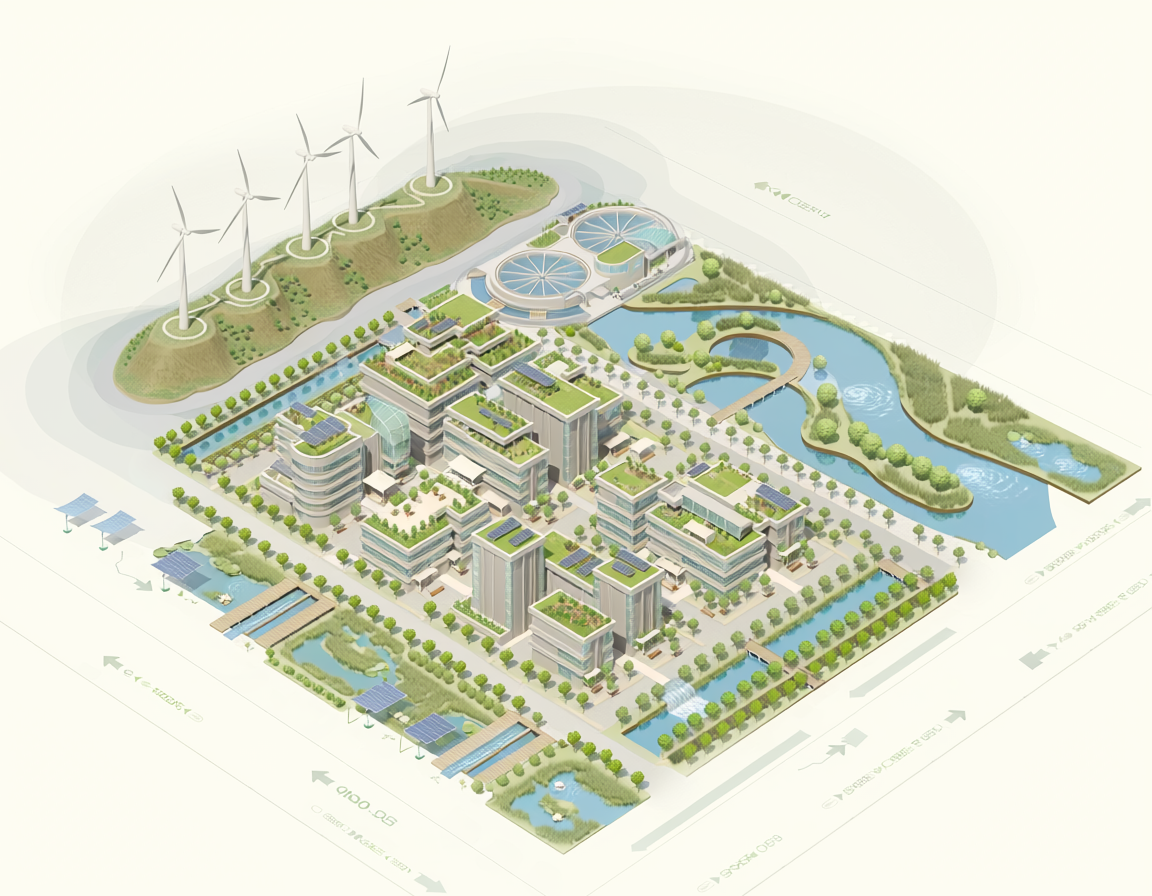
Social justice and social cohesion represent intertwined pillars of a resilient society, reflecting the fair distribution of resources and the strength of community bonds. When structural inequities are systematically dismantled, a deep sense of shared belonging and mutual trust naturally emerges among diverse populations. The physical layout of neighborhoods plays a critical role in this dynamic, as inclusive civic planning directly prevents spatial segregation and alienation. Ultimately, fostering an equitable environment ensures that every individual can meaningfully participate in, and contribute to, the collective well-being of their community.

Fostering Equity through the Ecosystemic Built Environment
Within modern architectural and urban design, the concepts of social justice and social cohesion are no longer viewed merely as abstract political ideals, but rather as measurable qualities of the built environment. Ecosystemic research frameworks assert that physical space and natural systems operate in tandem with human society, directly influencing interpersonal dynamics, trust, and public well-being (Jennings & Bamkole, 2019). When cities systematically introduce Nature-based Solutions (NBS)—such as accessible urban forests, pocket parks, and green roofs—they do not just address climate resilience; they also alter the “geographies of encounter” that define intercultural and cross-cultural experiences (Aelbrecht & Stevens, 2023).
However, integrating green infrastructure into historically marginalized or highly densified neighborhoods demands rigorous, participatory research methods. Historically, top-down municipal greening projects have inadvertently triggered “green gentrification,” driving up housing costs and paradoxically displacing the vulnerable populations they were intended to support (Jennings et al., 2024). To counter this, transdisciplinary platforms like Oppla.eu function as vital repositories of shared knowledge, connecting European researchers, policymakers, and local practitioners with standard legal toolkits and ecosystemic methodologies (O’Hogain & McCarton, 2018). These open-source ecosystems bridge the gap between abstract academic metrics and real-world implementation, standardizing co-design protocols to ensure that local communities maintain stewardship over their transformed physical landscapes.
From an ecosystemic perspective, urban planning models must adopt sophisticated socio-ecological indicators to ensure social justice. Research increasingly demonstrates that equitable access to high-quality parks and localized food networks—such as community gardens—profoundly reduces all-cause mortality, enhances localized food security, and fosters place attachment among structurally disadvantaged groups (Jennings et al., 2024). By treating the built landscape as a complex, living social-ecological system, planners can use data-driven modeling to optimize public spaces for meaningful physical interaction. When infrastructure is co-created with a focus on accessibility and historical equity, it transforms standard urban landscapes into shared community anchors that actively build trust, promote healthy behaviors, and secure long-term social sustainability.
References
Aelbrecht, P., & Stevens, Q. (2023). Geographies of Encounter, Public Space, and Social Cohesion: Reviewing Knowledge at the Intersection of Social Sciences and Built Environment Disciplines. Urban Planning, 8(4). https://doi.org/10.17645/up.v8i4.6540
Cited by: 29
Jennings, V., & Bamkole, O. (2019). The Relationship between Social Cohesion and Urban Green Space: An Avenue for Health Promotion. International Journal of Environmental Research and Public Health, 16(3), 452. https://doi.org/10.3390/ijerph16030452
Cited by: 1445
Jennings, V., Rigolon, A., Thompson, J., Murray, A., Henderson, A., & Gragg, R. S. (2024). The Dynamic Relationship between Social Cohesion and Urban Green Space in Diverse Communities: Opportunities and Challenges to Public Health. International Journal of Environmental Research and Public Health, 21(6), 800. https://doi.org/10.3390/ijerph21060800
Cited by: 76
O’Hogain, S., & McCarton, L. (2018). Nature-Based Solutions. A Technology Portfolio of Nature Based Solutions, 1-9. Springer International Publishing. https://doi.org/10.1007/978-3-319-73281-7_1
Cited by: 180