European policy sets the overarching regulatory and strategic framework designed to align member states toward climate neutrality and systemic environmental restoration by 2050.
These policies, such as the European Green Deal, mandate a transition in the built environment by integrating rigorous ecological standards with urban planning.
By emphasizing cross-border knowledge exchange and data-driven governance, the EU facilitates the deployment of nature-based solutions and circular resource management.
Methods like the Urban Agenda for the EU bridge the gap between high-level legislative goals and the practical, local-level implementation of resilient infrastructure.
Ultimately, this policy landscape serves as a catalyst for innovation, ensuring that modern construction evolves into a regenerative, life-supporting contributor to planetary health.
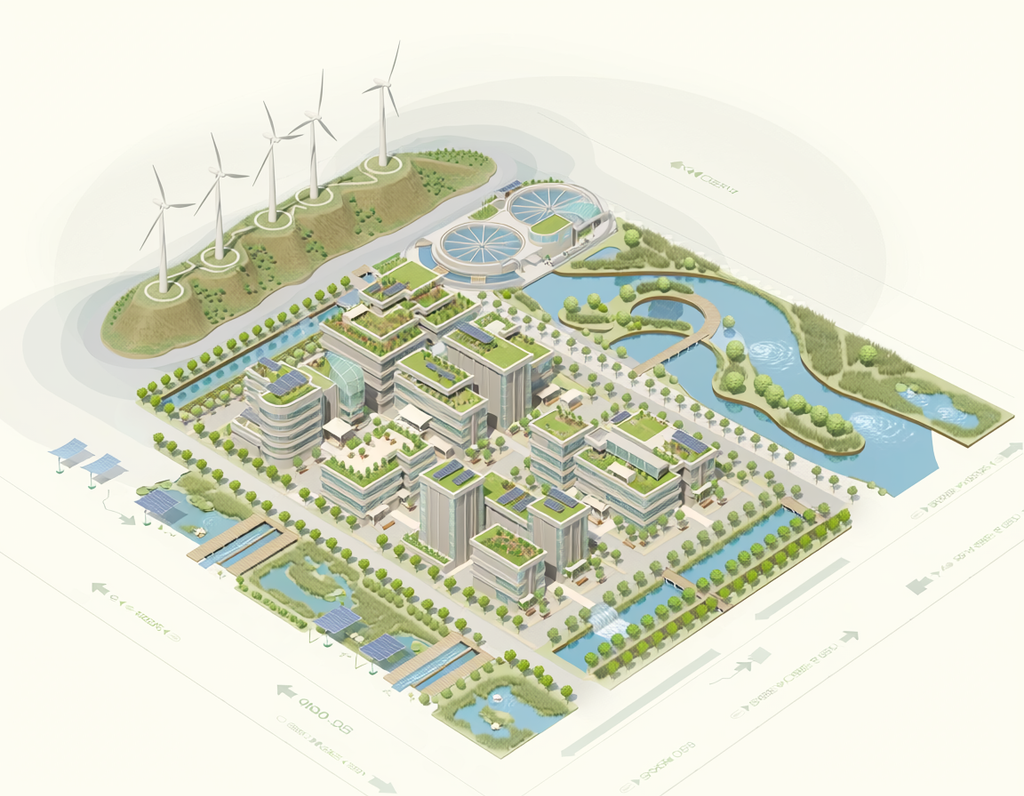
Integrating Policy with Ecosystemic Urban Research
The European Union’s approach to the built environment has shifted from isolated regulatory compliance toward a holistic, ecosystemic model of urban development. At the heart of this transformation is the European Green Deal, a comprehensive roadmap that aligns regional development with ambitious climate-neutrality targets.
For the built environment, this means moving beyond simple energy-efficiency mandates to embrace the Renovation Wave, which treats buildings as dynamic nodes within a larger urban ecosystem. This policy shift prioritizes the integration of nature-based solutions (NBS) not just as aesthetic additions, but as critical infrastructure for climate adaptation, water management, and biodiversity protection.
To operationalize these high-level directives, the EU employs a multi-level governance method known as the Urban Agenda for the EU. This platform promotes cooperation between member states, cities, and the European Commission to ensure that policy development is informed by real-world practice. By facilitating thematic partnerships, the agenda allows cities to exchange best practices on topics ranging from water-sensitive urban design to circular building practices. This collaborative approach effectively breaks down the silos that historically separated environmental science from urban planning, ensuring that policies are evidence-based and responsive to the unique challenges of local biogeographic contexts.
A fundamental pillar of this strategy is the systematic reliance on research and open-access knowledge sharing. Platforms such as Oppla.eu serve as essential conduits for this knowledge, translating complex ecological research into actionable tools for urban planners and policy-makers.
By hosting a diverse repository of case studies, the platform allows municipalities to bypass the “trial-and-error” phase, offering proven models for urban green infrastructure that have been successfully piloted elsewhere in Europe. This acceleration of knowledge transfer is critical for meeting the requirements of directives like the Nature Restoration Regulation, which requires cities to actively enhance biodiversity through systemic greening efforts.
Furthermore, the EU incentivizes this systemic transformation through targeted funding and innovation programmes, such as Horizon Europe and the LIFE programme. These financial instruments support “living labs” and lighthouse projects that demonstrate the cost-effectiveness of ecological engineering. By focusing on the socio-economic benefits of healthy environments—such as reduced health expenditures, improved air quality, and protection against extreme weather—these projects build a compelling business case for sustainable investment.
This data-driven, economic validation is essential for moving from pilot projects to city-wide scale, ensuring that resilience and sustainability become the standard baseline for all future urban development in Europe.
Ultimately, EU policy is the primary engine driving the transition toward a regenerative built environment. By fostering a culture of transparency, scientific rigor, and collaborative governance, the European Union provides the structural support necessary for cities to evolve from resource-intensive hubs into resilient, self-sustaining ecosystems that support both human flourishing and biological diversity.
References
- European Commission. (2026). Research and Innovation for the European Green Deal. Directorate-General for Environment.
- European Commission. (2025). Nature-Based Solutions Research Policy. Horizon Europe.
- European Urban Initiative. (2026). Urban Agenda for the EU: Partnerships and Policy Methods.
- Oppla. (2026). Information Hub for Nature-Based Solutions: Case Studies and Resources.
- World Green Infrastructure Network. (2026). Policy Guidance: Making European Cities healthier, more resilient and beautiful.
- World Bank Group. (2021). A Catalogue of Nature-Based Solutions for Urban Resilience.