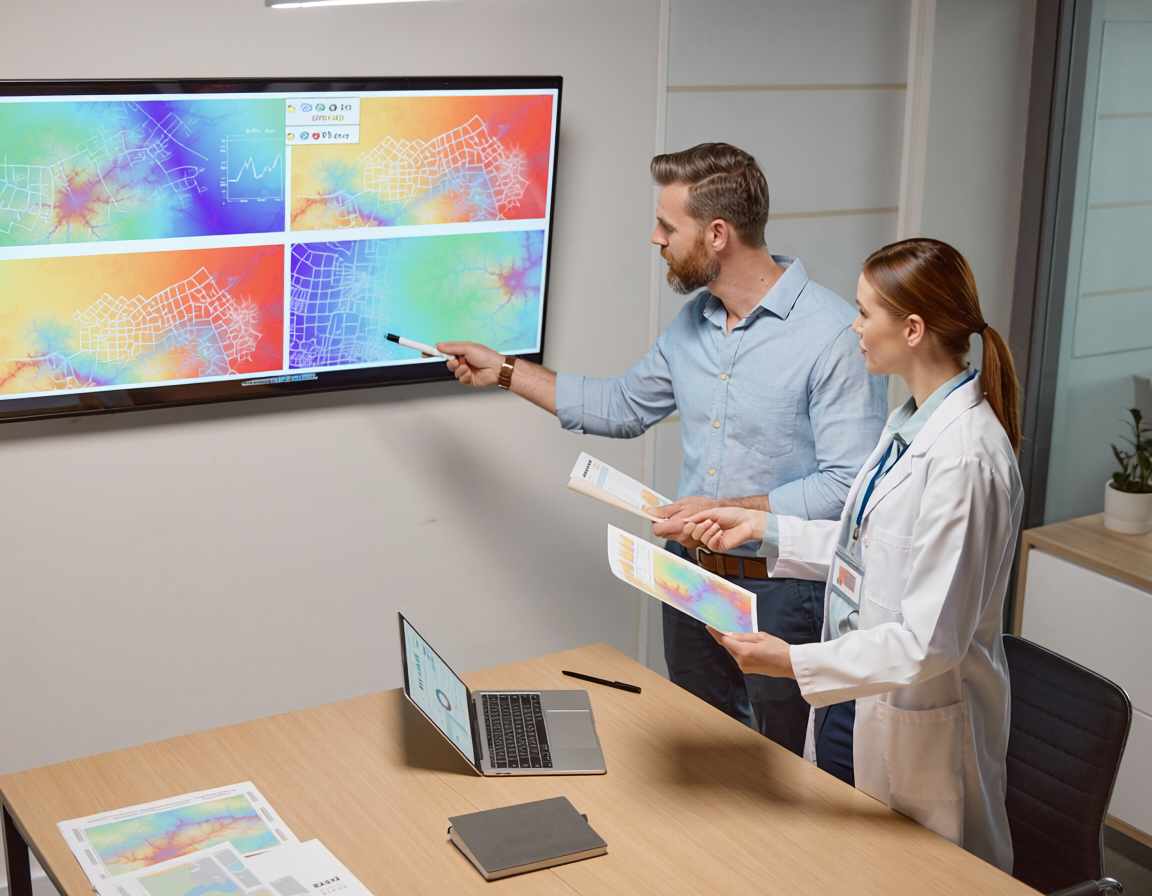
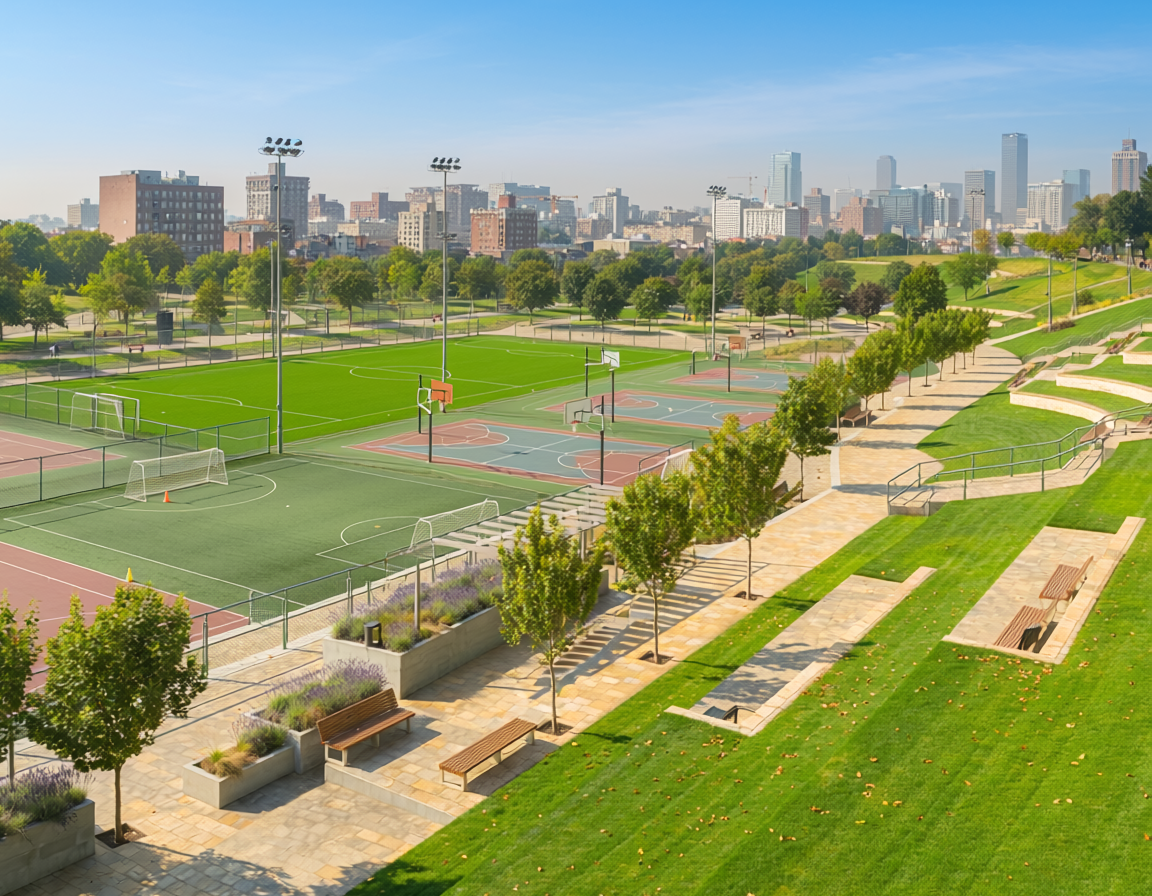
Inviting community members into the early stages of urban planning establishes a deeply democratic foundation for local climate resilience initiatives. By creating clear pathways for direct public participation, municipal authorities can transition away from standard top-down infrastructure plans and embrace collaborative, grassroots urban designs. This hands-on involvement ensures that newly installed rain gardens, pocket parks, and green roofs reflect the unique social needs and historical character of the surrounding neighborhood. Ultimately, open and inclusive planning methods turn passive city residents into active stewards who are deeply invested in protecting their shared local environment.
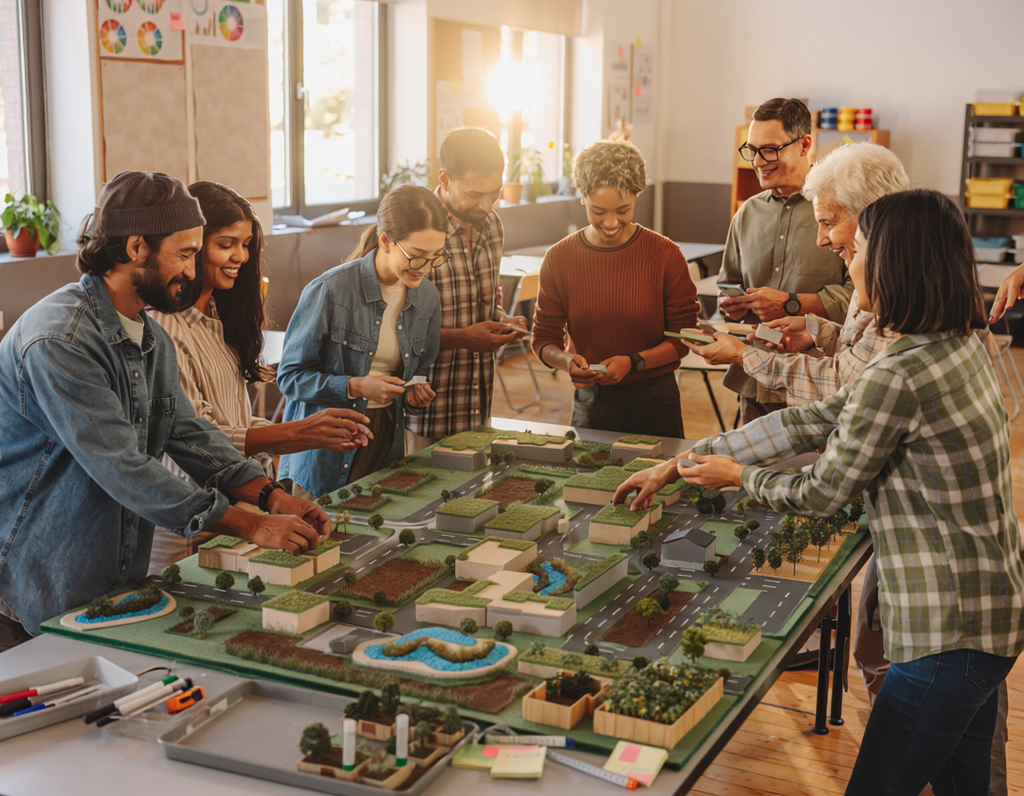
The systemic transition toward climate-resilient cities cannot be achieved solely through centralized engineering directives or technocratic real estate policies. While advanced biophysical modeling and spatial mapping determine the technical feasibility of nature-based solutions (NbS), the long-term viability of these interventions depends on human integration.
In contemporary ecosystemic research, active citizen engagement is defined as an operational methodology that embeds local communities directly into the planning, implementation, and long-term co-management of urban green infrastructure (UGI). By moving from passive public consultation to active co-creation, cities build robust social ownership while cultivating distributed ecological stewardship across the built landscape.
Participatory Methods in Ecosystemic Research
Mainstreaming active community involvement requires structured frameworks that allow non-experts to contribute meaningfully to complex urban designs. Ecosystemic researchers and urban designers utilize interactive, collaborative toolkits to bridge the gap between scientific metrics and local insights.
+————————————————————————-+
| CO-CREATION ENGAGEMENT PIPELINE |
+————————————————————————-+
| [ Inform & Consult ] –> Public Exhibitions & Informational Surveys|
| | |
| v |
| [ Co-Design Workshops ] –> Participatory Mapping & Spatial Target |
| Identification Workshops |
| | |
| v |
| [ Co-Management Hubs ] –> Neighborhood Stewardship, Monitoring, |
| & Local Maintenance Pacts |
+————————————————————————-+
| Socio-Ecologically Embedded Infrastructure |
+————————————————————————-+
Key engagement methodologies deployed in progressive municipal frameworks include:
- Participatory Mapping: Utilizing user-friendly geographic information systems (GIS) or physical workshops where residents identify neighborhood vulnerabilities, such as severe localized heat pockets or chronic street flooding.
- Co-Design Studios: Organizing structured charettes where architects, ecologists, and citizens co-author layout plans for pocket parks, urban farms, and bioswales, ensuring that ecological features match local recreational needs.
- Citizen Science Monitoring: Training community volunteers to use low-cost environmental sensors or mobile applications to track localized parameters like temperature drops around green envelopes, urban bird sightings, or stormwater absorption patterns.
Socio-Ecological Co-Benefits of Democratic Planning
When urban infrastructure projects prioritize active civic partnerships, they generate deep socio-ecological co-benefits that traditional top-down methods rarely achieve. From a social perspective, inclusive co-creation strengthens local social cohesion, builds institutional trust, and directly counteracts green gentrification by ensuring that marginalized communities retain a primary voice in neighborhood transformations.
From an environmental standpoint, community-led project development drastically lowers project failure and post-construction vandalism rates. When residents actively help plant a urban pocket forest or construct a neighborhood rain garden, they naturally transition into long-term caretakers. This localized maintenance significantly reduces the operational and financial burdens on municipal public works departments.
Scaling Engagement Strategies via Open Repositories
Mainstreaming collaborative urban design requires open platforms where municipal teams, non-profit groups, and community organizers can access field-tested participation toolkits. The Oppla.eu marketplace serves as a major repository for sharing these inclusive civic strategies across Europe. Oppla hosts case studies, step-by-step handbooks, and indicator sets from major international consortia, including the Horizon-funded CLEVER Cities and JUSTNature initiatives.
By exploring these shared open-access resources, urban planning teams can study how cities like Milan, London, and Hamburg embedded co-creation pathways directly into their formal procurement processes. Utilizing these pre-vetted institutional frameworks allows growing cities to bypass administrative friction, transforming public engagement from a routine compliance box into a functional catalyst for resilient urban design.
Refer to the database overview file 1000125286.jpg to see how active citizen engagement correlates with broader social and ecological governance parameters within the integrated catalog of the built environment.
References
CLEVER Cities Project. (2022). Co-designing nature-based solutions: A toolkit for cities. Oppla Repository. https://oppla.eu/clever-cities/toolkit-codesign
Frantzeskaki, N. (2019). Seven lessons for governing nature-based solutions in cities. Environmental Science & Policy, 93, 101-111. https://doi.org/10.1016/j.envsci.2018.12.033
Cited by: 687
Hölscher, K., Frantzeskaki, N., McPhearson, T., & Loorbach, D. (2019). Co-creating capacity for transition governance in the face of climate change. Environmental Science & Policy, 98, 144-155. https://doi.org/10.1016/j.envsci.2019.03.007
Cited by: 128
JUSTNature Project. (2026). Activating NbS through local collaboration: A transit zone becomes a ‘garden for all’ in Merano, Italy. Oppla Case Study Repository. https://oppla.eu/justnature/case-study/activating%E2%80%AFnbs%E2%80%AFthrough-local-collaboration.-%E2%80%AFa-transit-zone-becomes-a%E2%80%AF%E2%80%98garden-for-all%E2%80%99-in%E2%80%AFmerano%2C-italy.%E2%80%AF-
Kabisch, N., Frantzeskaki, N., Pauleit, S., Sanyé-Mengual, E., Groschopf, N., Fox-Kämper, R., … & Stadler, J. (2016). Nature-based solutions to climate change mitigation and adaptation in urban areas: Perspectives on indicators, knowledge gaps, barriers, and opportunities for action. Ecology and Society, 21(2), 39. https://doi.org/10.5751/ES-08373-210239
Cited by: 923
Marzano, M., Ambrose-Oji, B., & Green, S. (2019). Active citizen engagement in urban forestry: Insights from across European cities. Urban Forestry & Urban Greening, 40, 24-33. https://doi.org/10.1016/j.ufug.2018.09.011
Cited by: 85
Smaniotto Costa, C., Šuklje Erjavec, I., & Allen, B. (2021). Active public spaces: Co-creating the green urban landscape with local communities. Sustainability, 13(14), 7942. https://doi.org/10.3390/su13147942
Cited by: 42