Governance Frameworks for Nature-Based Solutions: Co-Design and Polycentric Methods in the Built Environment
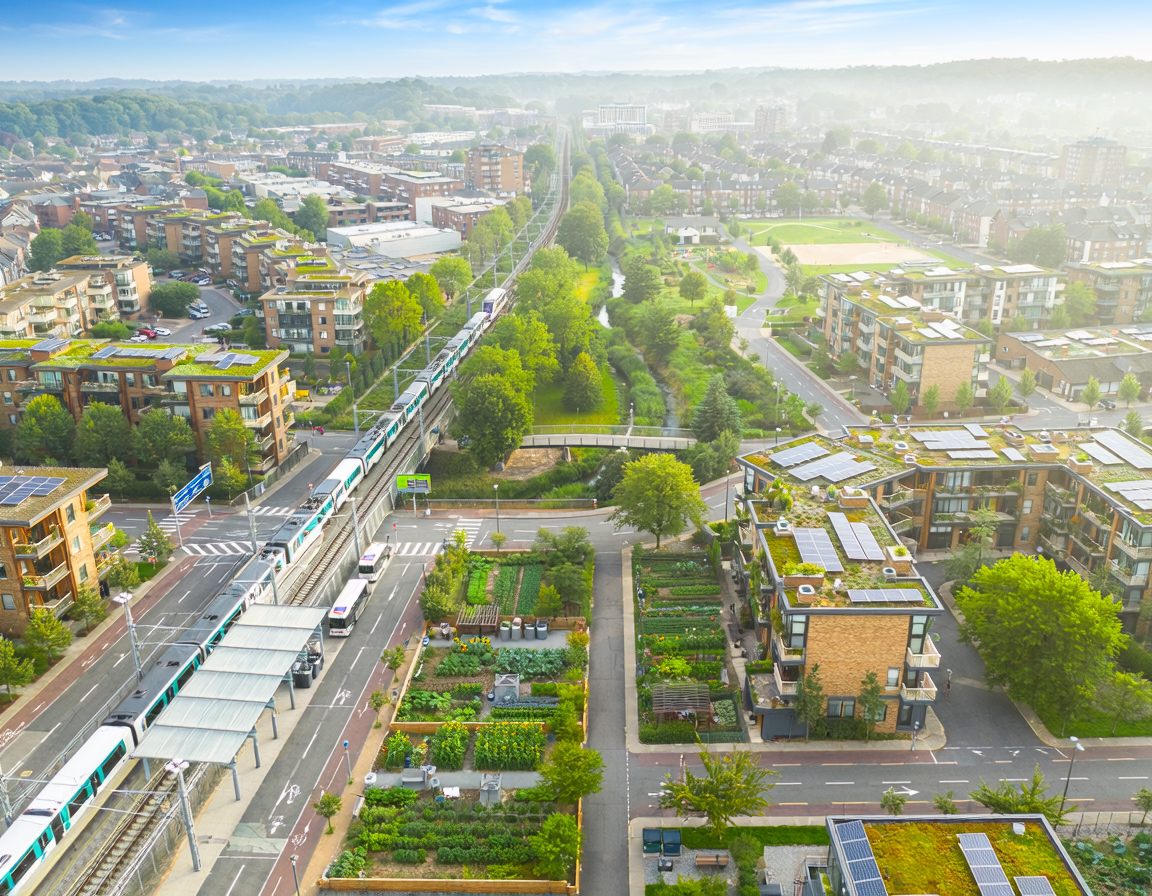
Governments, communities, and developers often face complex administrative silos when attempting to deploy green infrastructure. Overcoming these barriers requires innovative frameworks that redefine how cities plan and execute climate adaptation strategies. By restructuring decision-making pipelines and adopting transparent, multi-level frameworks, municipalities can successfully transition from rigid engineering models to flexible, nature-focused urban designs. This shift ensures that local ecological projects receive the necessary funding, policy backing, and community support to remain viable over time.
Ultimately, modern administrative systems act as the vital connective tissue that turns high-level sustainability goals into permanent, physically resilient urban realities.
Implementing urban green infrastructure (UGI) and nature-based solutions (NbS) within the built environment is fundamentally a challenge of institutional structure rather than engineering capacity. Traditional administrative architectures typically rely on top-down, sectoral divisions—where water management, parks, transportation, and building regulations operate in isolated silos. This disjointed approach frequently stalls innovative climate adaptation initiatives.
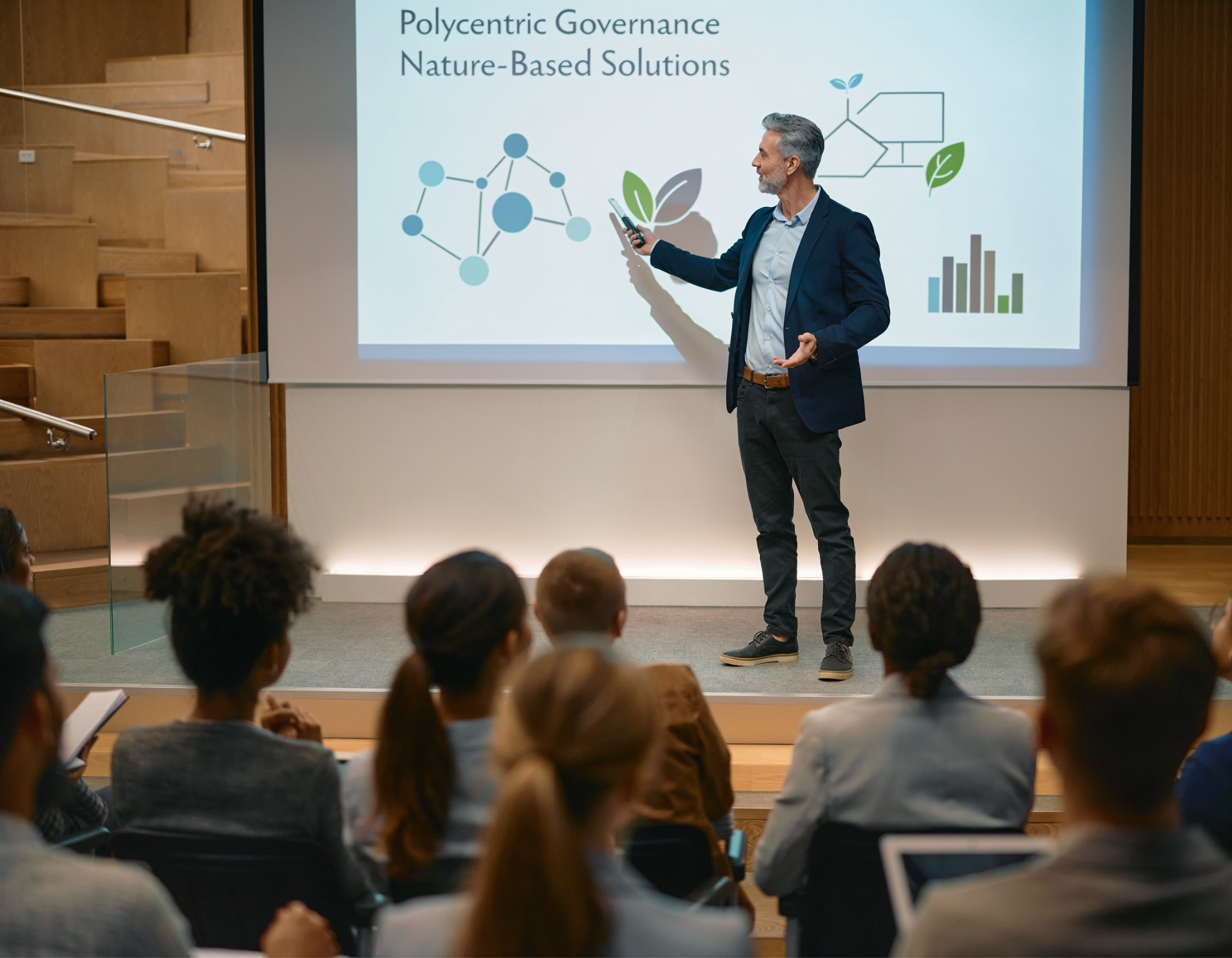
To overcome these structural barriers, contemporary ecosystemic research emphasizes the necessity of polycentric, collaborative management configurations. These systems bridge the gap between municipal authorities, private real estate developers, and civil society to facilitate the long-term stewardship of green urban assets.
Breaking Silos: Polycentric and Reflexive Governance Methods
Ecosystemic transformation in cities demands a transition toward “reflexive governance”—a method characterized by continuous learning, flexible policy instruments, and cross-sectoral cooperation. In a traditional urban planning model, a green roof or a sustainable drainage network faces friction because it crosses multiple regulatory jurisdictions: civil engineering handles runoff volumes, parks departments oversee vegetation, and building inspectors evaluate structural loads.
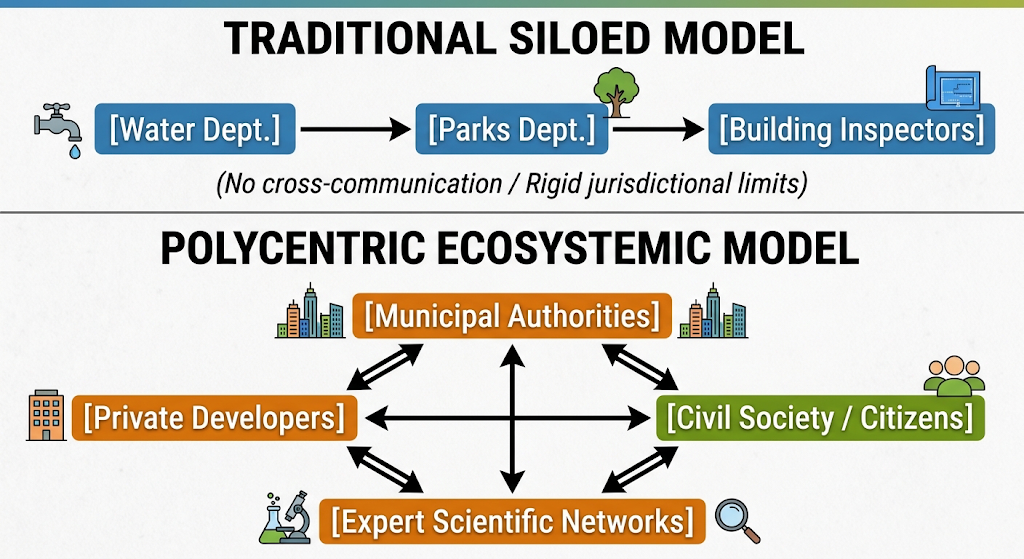
Polycentric methods solve this by establishing loose, interconnected decision-making centers that operate at multiple scales—from individual property boundaries to entire river basins. By aligning municipal planning laws with private financial incentives (such as stormwater fee credits for green walls), cities create an administrative ecosystem where green infrastructure becomes the default choice for real estate development. This collaborative approach distributes both financial risks and ecological rewards across multiple public and private stakeholders.
Co-Design, Inclusivity, and Co-Management
A core component of modern governance frameworks is the shift from tokenistic public consultation to active co-design and co-management. When local communities are excluded from the initial planning stages of neighborhood green spaces, projects frequently suffer from low public acceptance, vandalism, or long-term maintenance neglect.
In collaborative frameworks, citizens are treated as key partners in the urban ecosystem. Co-design methods use participatory mapping, interactive workshops, and joint design sessions to integrate local knowledge with expert engineering data. This inclusive approach ensures that green corridors serve dual purposes: providing climate resilience (such as microclimate cooling and flood protection) while meeting pressing social needs, such as creating accessible recreational spaces and improving local air quality.
Furthermore, co-management agreements allow neighborhood associations, schools, or local businesses to take ownership of maintaining urban green pockets. This reduces the long-term financial burden on municipal budgets and fosters a deep sense of community stewardship.
Knowledge Platforms and Institutional Mainstreaming
Mainstreaming these collaborative frameworks requires reliable digital platforms that archive, evaluate, and scale successful strategies. The Oppla.eu marketplace and repository serve as an open-access platform for sharing these administrative strategies across Europe. Through case studies from major international projects like Urban GreenUP and CLEVER Cities, Oppla provides actionable tools, such as business model canvases and urban governance indicator sets.
These resources assist municipal leaders in evaluating the institutional readiness of their organizations. By learning from real-world examples, cities can shift away from ad-hoc, experimental pilot projects. Instead, they can draft comprehensive, legally binding green infrastructure masterplans that are fully integrated into municipal budgets, public procurement protocols, and regional climate adaptation strategies.
References
Bush, J., & Doyon, A. (2019). Building urban resilience with nature-based solutions: How can urban planning contribute? Cities, 95, 102409. https://doi.org/10.1016/j.cities.2019.102409
Cited by: 412
Frantzeskaki, N. (2019). Seven lessons for governing nature-based solutions in cities. Environmental Science & Policy, 93, 101-111. https://doi.org/10.1016/j.envsci.2018.12.033
Cited by: 687
Hölscher, K., Frantzeskaki, N., McPhearson, T., & Loorbach, D. (2019). Co-creating capacity for transition governance in the face of climate change. Environmental Science & Policy, 98, 144-155. https://doi.org/10.1016/j.envsci.2019.03.007
Cited by: 128
Kabisch, N., Frantzeskaki, N., Pauleit, S., Sanyé-Mengual, E., Groschopf, N., Fox-Kämper, R., … & Stadler, J. (2016). Nature-based solutions to climate change mitigation and adaptation in urban areas: Perspectives on indicators, knowledge gaps, barriers, and opportunities for action. Ecology and Society, 21(2), 39. https://doi.org/10.5751/ES-08373-210239
Cited by: 923
CLEVER Cities Project. (2022). Co-designing nature-based solutions: A toolkit for cities. Oppla Repository. https://oppla.eu/clever-cities/toolkit-codesign
Urban GreenUP. (2023). New governance models for the implementation of nature-based solutions in cities. Urban GreenUP Deliverable Report. https://www.urbangreenup.eu/resources/deliverables/d5-3-new-governance-models.pdf
van der Jagt, A. P., Raven, R., Dorst, H., & Runhaar, H. (2020). Nature-based innovation systems: An institutional framework for assessing and fostering nature-based solutions in cities. Environmental Innovation and Societal Transitions, 35, 1-14. https://doi.org/10.1016/j.eist.2020.01.002
Cited by: 115