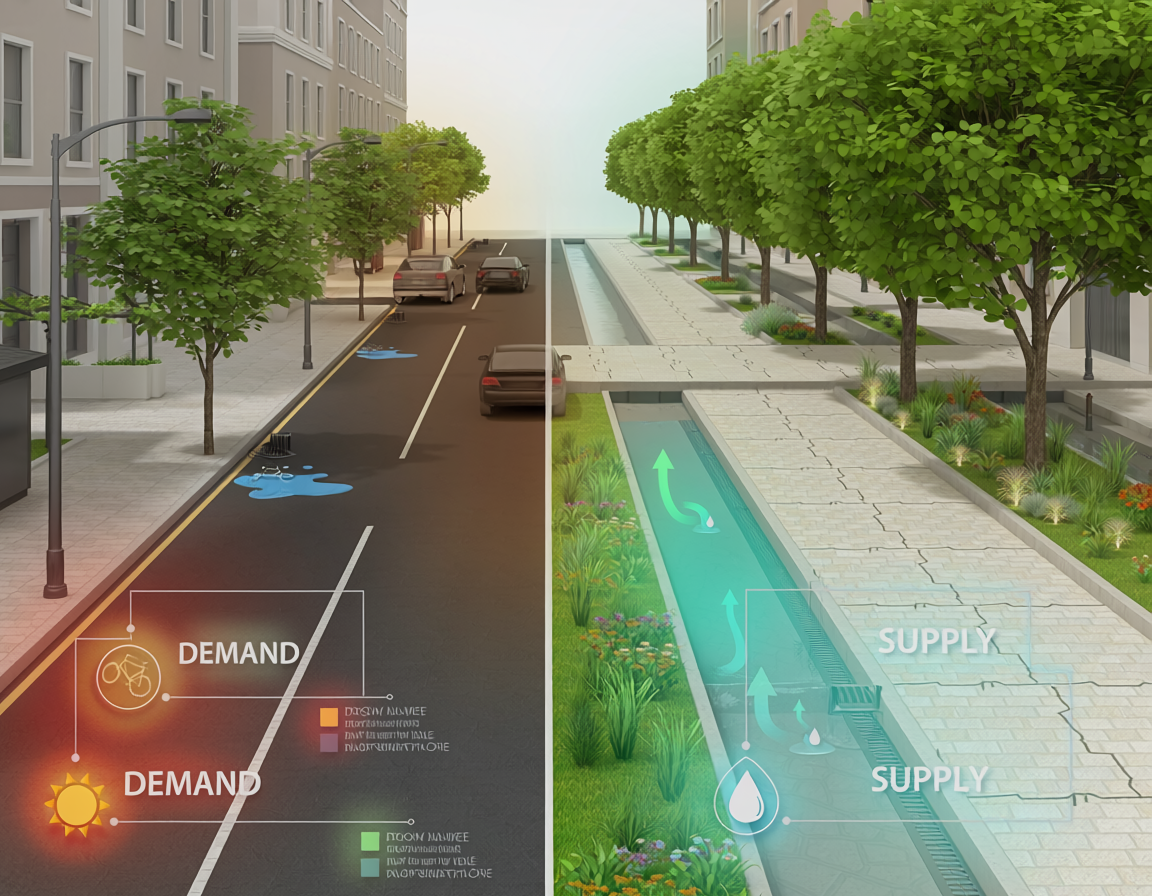
Natural capital represents the finite stock of renewable and non-renewable biophysical assets within an ecosystem that combine to yield a continuous flow of valuable services to human populations. Shifting away from traditional economic models that treat nature as an infinite, external externality, modern urban planning quantifies these environmental resources as foundational infrastructure. The precise mapping of urban soils, regional water bodies, and diverse plant networks allows cities to calculate the direct financial and structural returns generated by natural systems. However, protecting these vital environmental assets depends on standardized accounting methods, long-term asset management, and nature-inclusive development policies. When integrated into metropolitan financial frameworks, high-value natural capital transformations turn vulnerable urban centers into self-sustaining, balance-sheet-resilient landscapes that support long-term climate survival.
Defining Natural Capital within the Built Environment
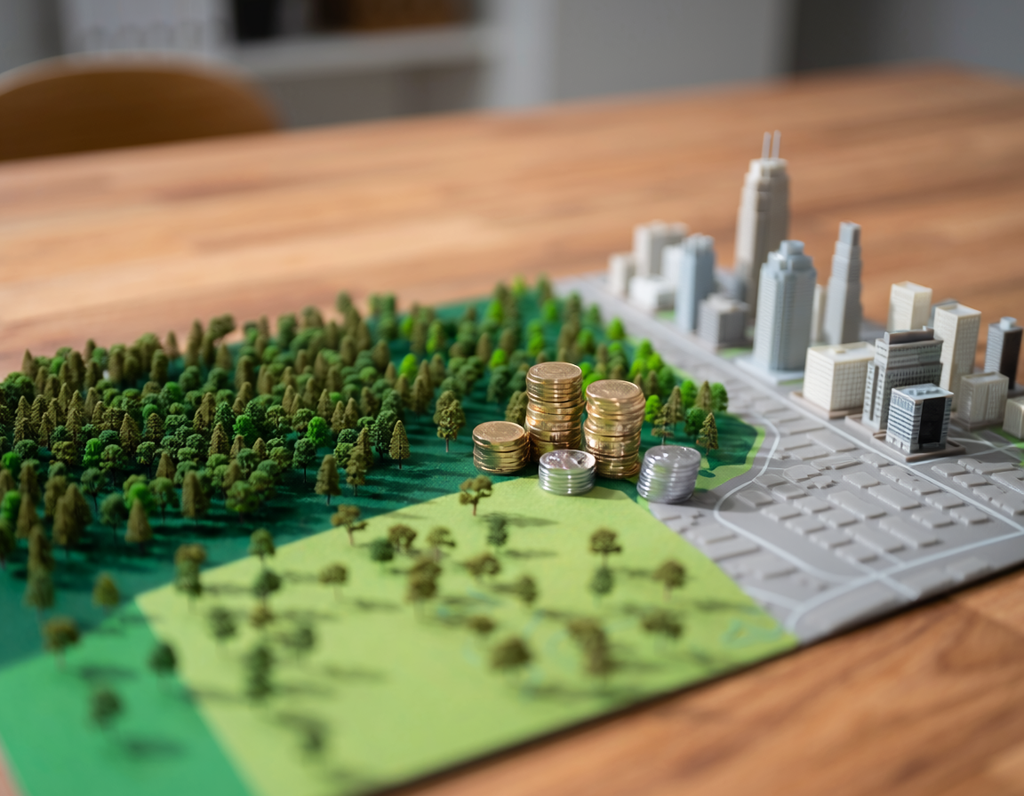
In ecological economics, sustainable urban design, and environmental engineering, natural capital refers to the accumulated stock of geology, soil, air, water, and all living organisms that generate a continuous flow of ecosystem services for human settlements. Within the built environment, identifying and tracking natural capital marks a fundamental shift from treating nature as a decorative amenity toward managing it as an essential form of public infrastructure.
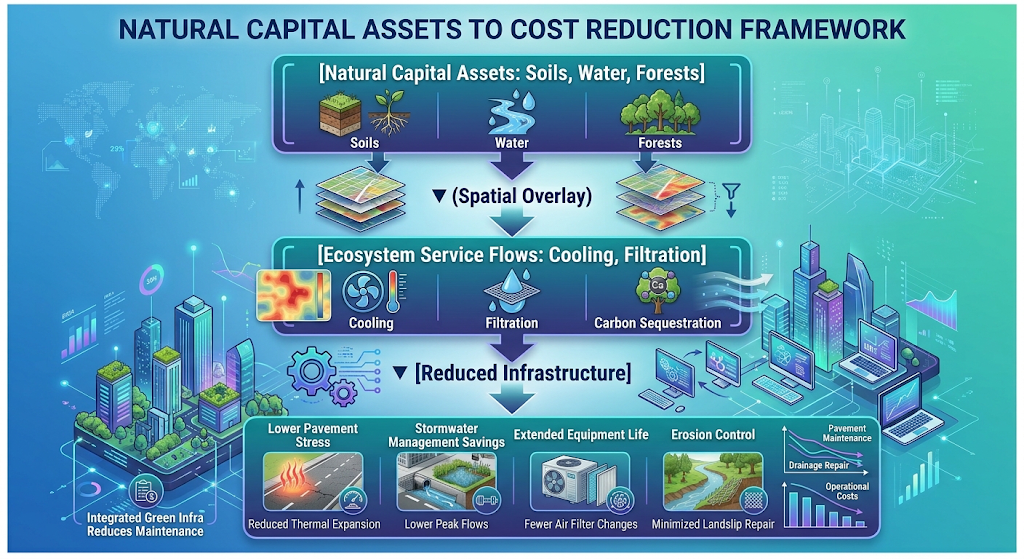
Historically, conventional real estate development practices treated undeveloped land as blank canvas, liquidating natural capital to install depreciating gray infrastructure like concrete stormwater networks and mechanical HVAC systems. By incorporating nature-based solutions (NBS), modern municipal planning frameworks actively measure and protect these environmental assets. Recognizing wetlands, urban tree canopies, and unsealed soil matrices as capital assets allows cities to calculate the direct economic value they provide—such as filtering stormwater, storing carbon, and reducing municipal energy bills—preventing the costly degradation of local ecosystems.
Methods and Ecosystemic Research
To measure, value, and track changes in natural capital assets across human-dominated landscapes, researchers deploy quantitative ecosystemic research methods that blend environmental accounting with spatial analysis.
Modern research teams use several specialized methodologies to manage urban natural capital:
- Corporate Natural Capital Accounting (CNCA): Asset managers track environmental gains and losses across municipal property portfolios. CNCA models prove that protecting large, continuous natural assets rather than fragmented green patches substantially lowers municipal long-term infrastructure repair budgets.
- Spatial Biophysical Resource Mapping: Landscape architects use geographic information systems (GIS) alongside airborne remote sensing to categorize and grade local natural stocks. These models evaluate canopy volumes, soil permeability, and wetland areas to quantify the physical capacity of ecosystems to buffer neighborhoods against severe climate shocks.
- Ecosystem Service Financial Valuation: Environmental economists utilize valuation engines like the i-Tree Eco suite to calculate the avoided cost of natural systems. These simulations show that a mature urban tree canopy functions as an appreciating asset, delivering significant annual financial returns through natural air filtration and local climate regulation.
The Role of Knowledge Platforms: Incorporating Oppla.eu
Integrating natural capital values into standard banking, insurance, and municipal zoning frameworks requires open-access knowledge bases. The Oppla.eu community repository serves as a primary European network for nature-based solutions, offering practitioners field-tested asset management toolkits, case studies, and environmental accounting handbooks.
The toolkits hosted on these platforms emphasize that natural capital must be actively managed to prevent depreciation from intense urban stress. For example, natural capital resources on Oppla show how cities can use nature-based interventions to restore degraded soil and water stocks, transforming environmental liabilities into high-yielding assets:
| Natural Capital Stock | Urban Management Strategy | Primary Infrastructure Asset Yield |
| Alluvial Wetland Systems | Reconnecting urban river corridors to natural floodplains and reed beds. | Functions as a regional flood buffer; replaces expensive gray concrete storm barriers. |
| Unsealed Urban Soil Profiles | Mitigating mechanical compaction using organic composts and mycorrhizal inoculations. | Operates as a localized drainage sponge; boosts the survival rates of urban tree planting investments. |
| Continuous Municipal Forests | Expanding high-density, multi-species native tree networks along transportation rings. | Serves as a biological air scrubbing factory; reduces public healthcare spending on respiratory illnesses. |
By utilizing collaborative tools from integrated European urban greening handbooks, municipal agencies can move away from traditional economic models that overlook environmental loss. Instead, they can treat natural capital as a primary component of local asset management plans, embedding biophysical metrics directly into zoning laws to ensure that urban development expands, rather than erodes, the natural systems that support human life.
References
- European Commission. (2025). Handbook of tools for informing and monitoring urban greening strategies and nature plans. Knowledge Centre for Biodiversity / BioAgora. BioAgora Resource Library.
- European Environment Agency. (2020). The circular economy in Europe — Soft on materials, hard on spatial design. EEA Report. EEA Publication Portal.
- Fagerholm, N., et al. (2022). Co-creating ecosystem services in Nordic municipalities: Practical approaches to provisioning and regulating assets. Nordic Council of Ministers. Nordic Portal Access.
- Forest Research. (2017). Delivery of ecosystem services by urban forests. Research Report. Forest Research PDF.
- Guedes, A., et al. (2019). Measuring and Improving Urban Tree Vitality and Ecosystem Services Provisioning through Inoculation with Ectomycorrhizal Fungi in Porto (URBANMYCOSERVE). BiodivERsA Project. Oppla Case Repository.
- Oppla.eu / Climate-ADAPT. (2021). OPPLA – Information hub for nature-based solutions. European Environment Agency. Climate-ADAPT Info Profile.
- Oppla.eu. (2019). Resource Repository: Integrating natural capital accounting into regional landscape planning. Oppla Resource Hub.
- Popescu, A., & Ionescu, M. (2024). Material Flow Analysis and Life-Cycle Assessment of Biogenic Building Components in Central and Eastern European Urban Regions. Sustainability, 16(4), 1564. MDPI Open Access.