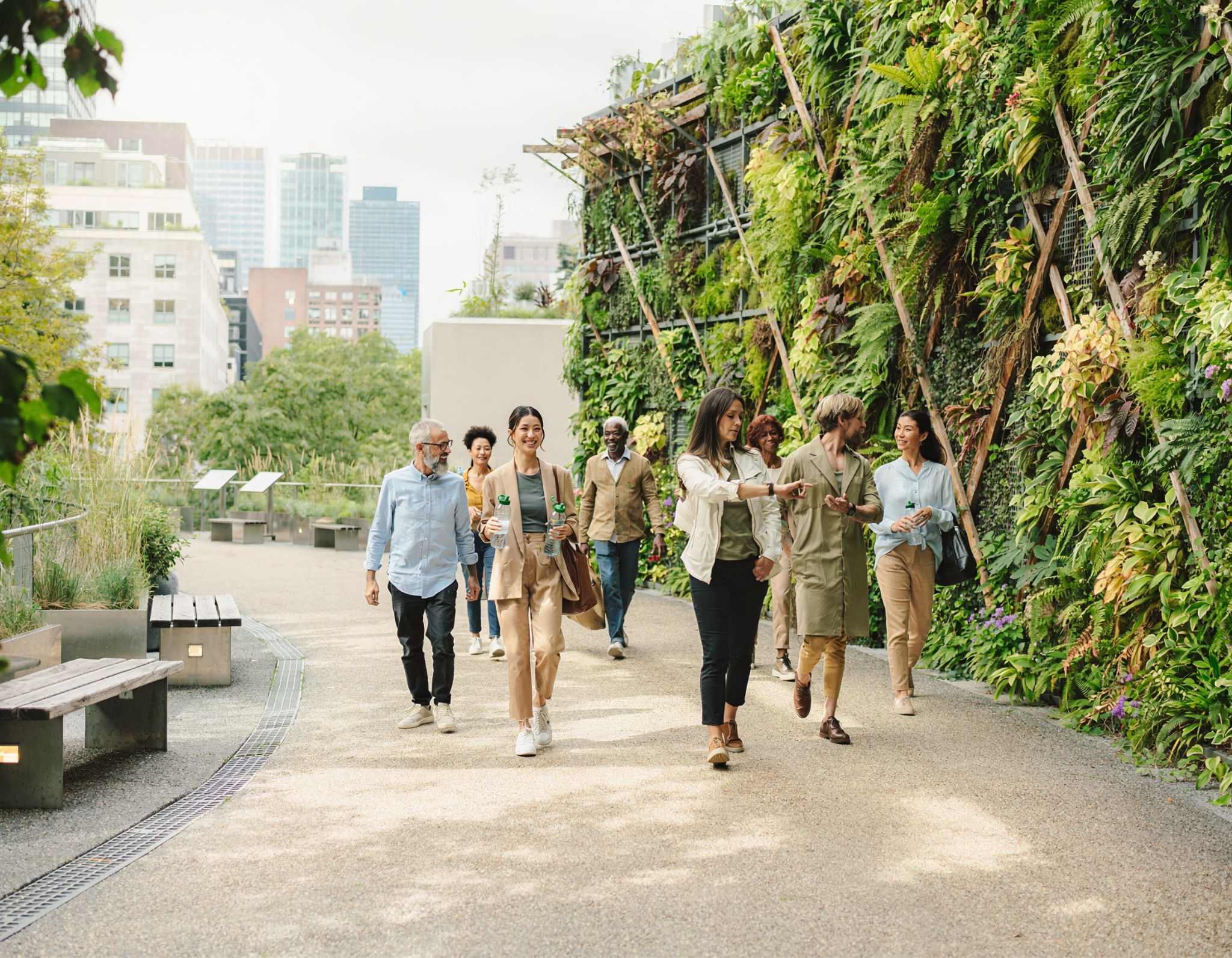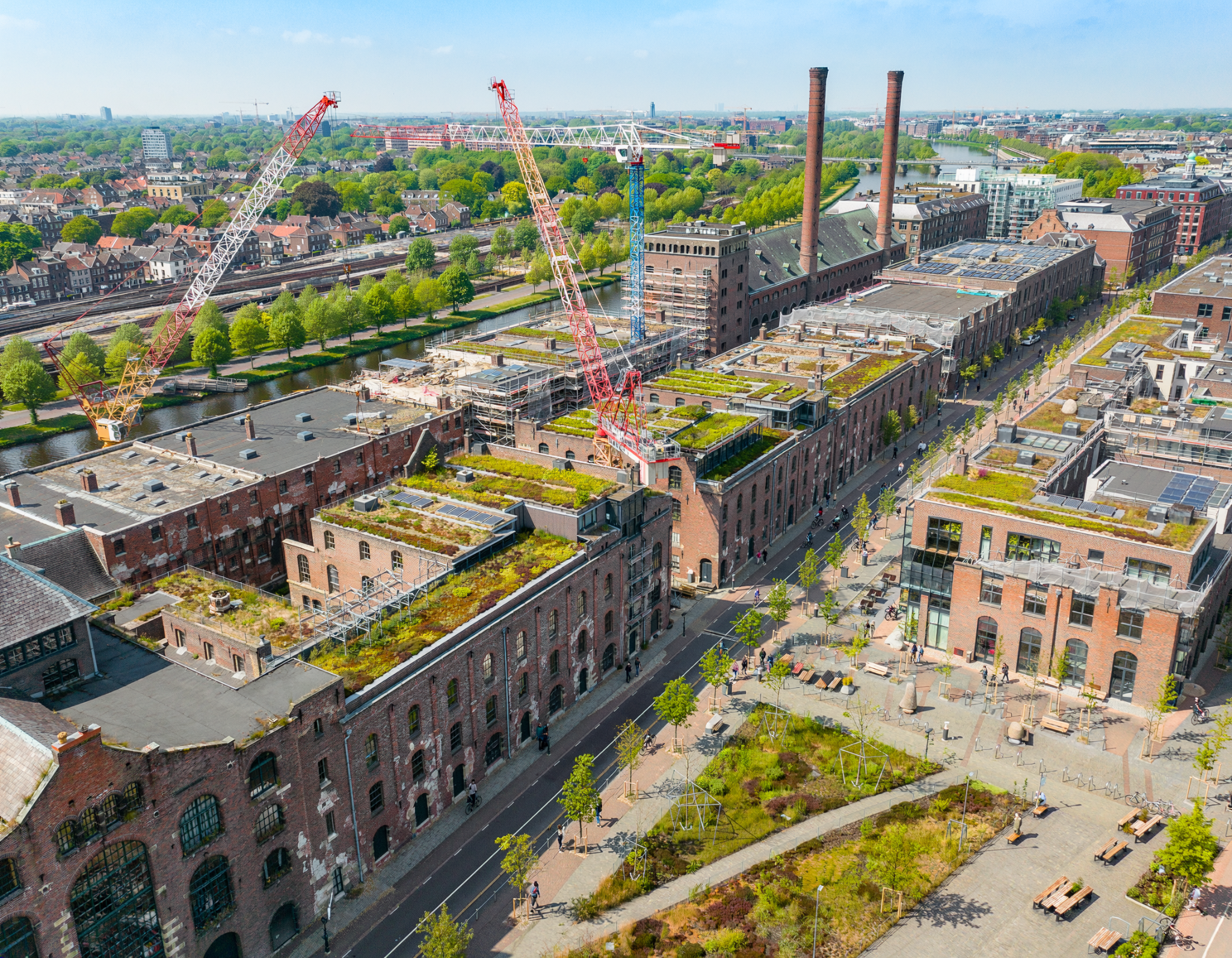
Urban regeneration within the built environment represents a holistic planning strategy designed to revitalize degraded, post-industrial, or neglected metropolitan neighborhoods. Modern revitalization efforts have shifted away from traditional, purely structural demolition and gray reconstructions, which frequently exacerbated localized climate vulnerabilities and social fragmentation. Instead, contemporary urban renewal approaches treat city fabrics as dynamic, coupled social-ecological systems where architectural updates must actively support local environmental restoration. By transforming brownfields and obsolete infrastructure into functional ecological networks, municipalities can address long-standing challenges like soil contamination, stormwater surge, and unequal access to community green space. Through collaborative networks, modern planning practices ensure these integrated nature-based solutions deliver widespread social benefits, biological diversity, and lasting climate adaptation.
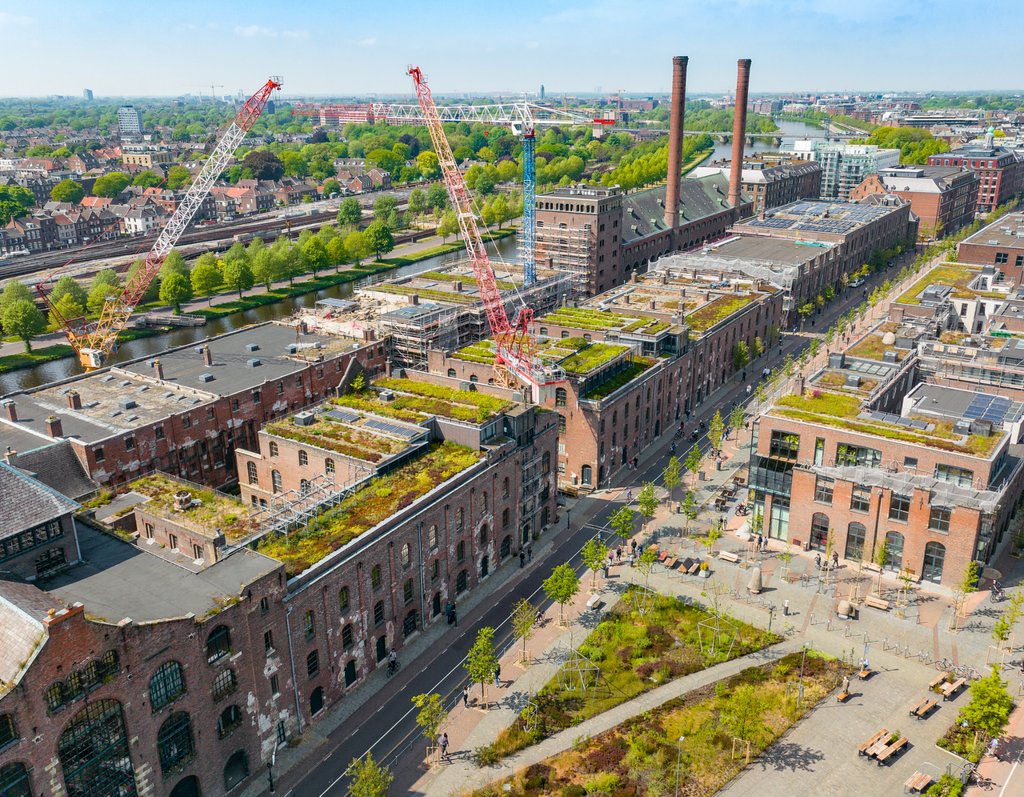
Introduction to Ecological Urban Regeneration
Urban regeneration is an integrated planning and design framework aimed at resolving the structural, economic, and environmental decline of older municipal districts. Historically, municipal authorities approached urban renewal through a narrow lens, relying heavily on capital-intensive demolition and the installation of single-purpose gray infrastructure.
Modern ecosystemic research, however, reframes these degraded districts—such as obsolete docklands, abandoned industrial rail lines, and marginalized residential pockets—as underperforming social-ecological landscapes. When applied to the built environment, contemporary urban regeneration shifts from a model of mere aesthetic or economic replacement to one of systemic ecological rehabilitation (MDPI, 2026). It treats physical restructuring as an opportunity to weave biological processes directly into dense metropolitan cores, ensuring that architectural updates mitigate existing environmental stress.
[Degraded Post-Industrial Site] ───> [Co-Designed NbS Interventions] ───> [Ecosystemic & Social Renewal]
Methods and Ecosystemic Research in Degraded Landscapes
Transforming degraded urban zones into high-performing environmental assets requires highly specialized spatial, physical, and community-driven methods. Ecosystemic research demonstrates that rather than deploying disconnected greening patches, effective regeneration demands a network approach that establishes multi-functional nature-based solutions for urban sustainable development across highly altered city layouts (UNFCCC, 2017).
Key operational methods utilized in modern regeneration initiatives include:
- Biotic Soil Remediation: Regenerating contaminated, heavily compacted industrial soils by using specific plant species and microbial compounds to lock up or break down toxins naturally, avoiding massive soil removal.
- Hydro-Social Re-Naturing: Daylighting buried urban streams and turning concrete drainage canals into multi-functional riparian corridors that act as regional flood retention buffers and scenic public parks.
- Productive Green Infrastructure (PGI): Combining community-led urban agriculture, aquaponics, and distributed pocket forests to replace industrial brownfields with spaces that generate food and provide microclimatic cooling.
Ecosystemic research focuses heavily on tracking the long-term environmental and social benefits of these projects to prevent “green gentrification.” By systematically evaluating local changes in biodiversity, microclimatic temperature, and human well-being, researchers can design interventions that elevate environmental performance while supporting social equity.
Knowledge Networks and Collaborative Ecosystems
Scaling decentralized nature-based interventions from localized neighborhood pilots into comprehensive city-wide development plans requires access to verified data and shared governance frameworks. Because municipal planning departments often work within tight regulatory budgets, they need empirical case studies to justify choosing nature-based designs over familiar gray engineering methods.
To bridge this operational gap, open-access digital knowledge repositories have become invaluable resources for sharing tested European frameworks. The specialized platform Oppla.eu serves as a primary hub for nature-based solutions, hosting toolkits and data from major cross-continental research projects like the ReGreeneration initiative (Oppla, 2026).
Complementing these assets, the Horizon-funded proGIreg (productive Green Infrastructure for post-industrial urban regeneration) program establishes active Living Labs across multiple European and global cities (CORDIS, 2024). By leveraging these collaborative networks, urban planners, architects, and community organizers can retrieve standardized performance metrics, allowing them to transform abandoned, polluted spaces into vibrant, climate-resilient urban habitats.
References
CORDIS. (2024). Productive Green Infrastructure for post-industrial urban regeneration (proGIreg): Project fact sheet. European Commission. https://cordis.europa.eu/project/id/776528
MDPI. (2026). Nature-based solutions in urban regeneration: A review of methods, governance, and future directions. https://www.mdpi.com/2413-8851/10/3/130
Oppla. (2026). ReGreeneration: Reimagining urban neighbourhoods through nature-based solutions. https://oppla.eu/regreeneration
UNFCCC. (2017). Nature-based solutions for sustainable urban development. United Nations Framework Convention on Climate Change. https://unfccc.int/files/parties_observers/submissions_from_observers/application/pdf/777.pdf