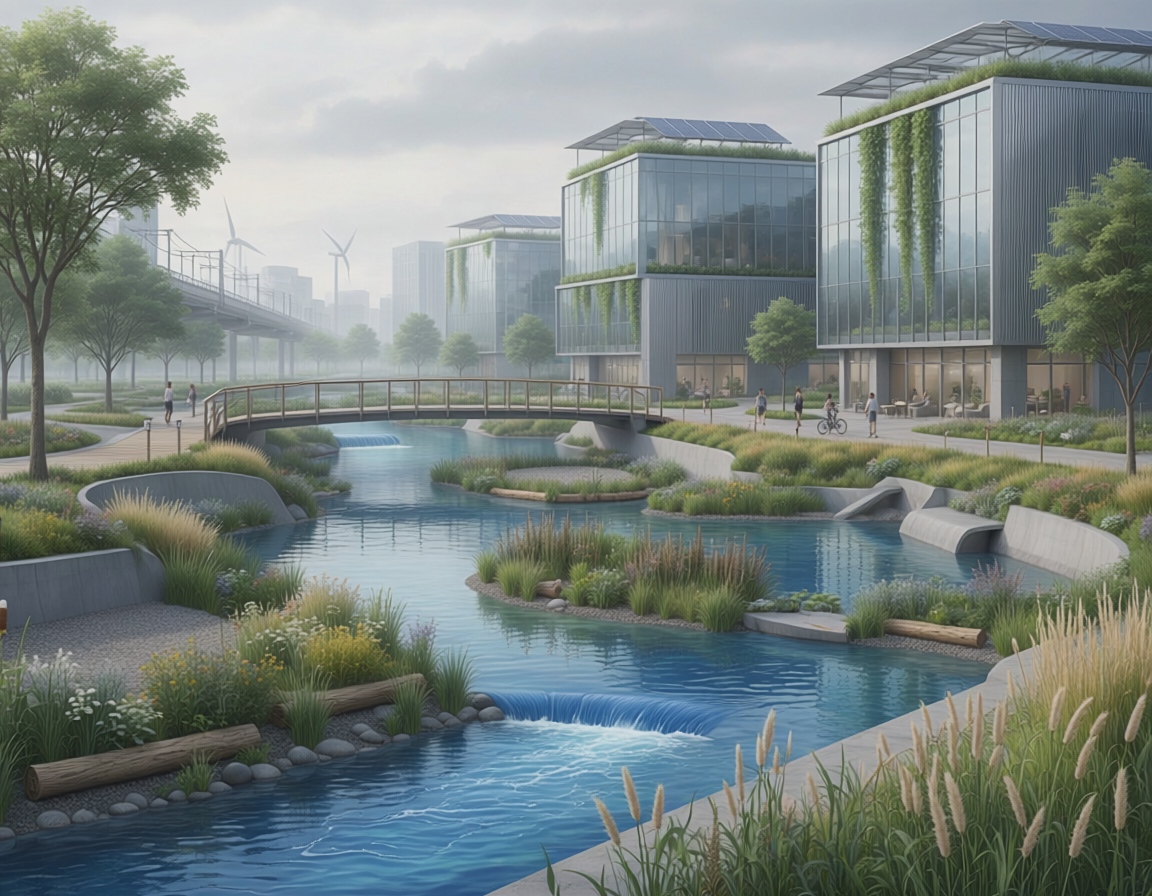
Dense urban concrete layouts often suffer from severe environmental degradation, from extreme local temperatures to heavily polluted air corridors. To resolve these compounding issues, modern urban architecture utilizes green infrastructure—a planned network of parks, green roofs, and living plant barriers engineered to deliver active ecological benefits. By embedding these vegetative structures directly into city grids, planners can transition from artificial building materials to natural microclimatic cooling and active particulate matter filtration. These specialized networks absorb excess solar radiation, filter out airborne contaminants, and lower localized surface temperatures through moisture release. Ultimately, strategically mapping vegetative networks transforms hard gray grids into high-performing, climate-resilient urban ecosystems.
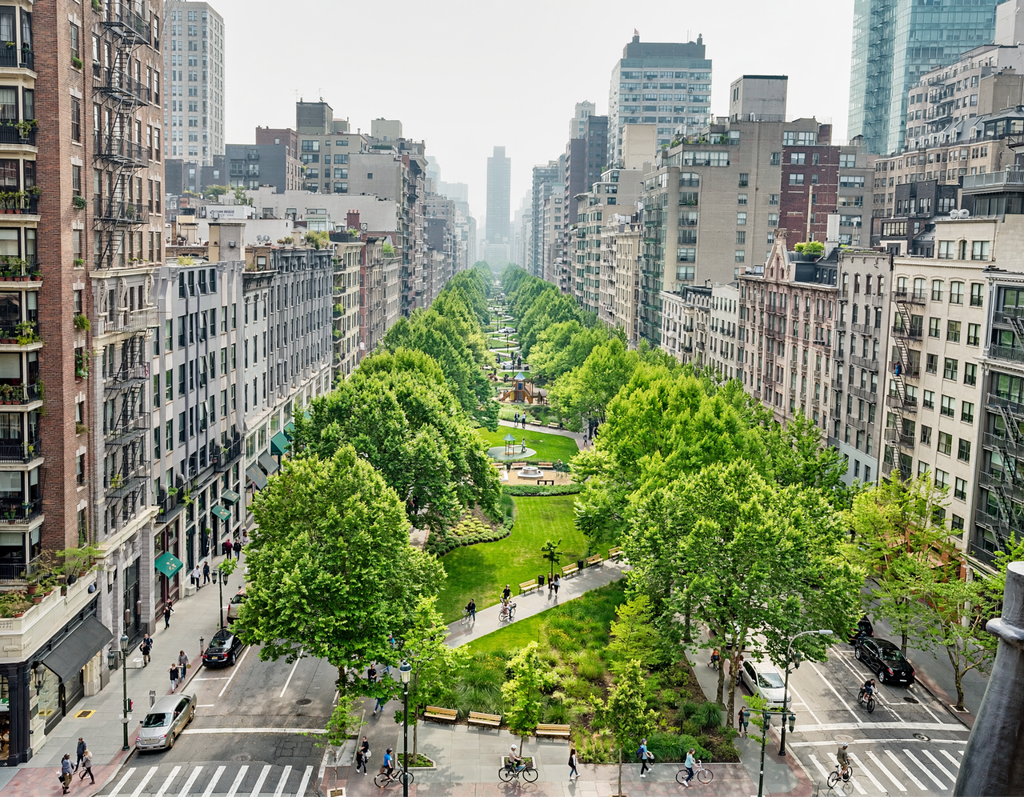
Urban expansion has traditionally relied on the extensive use of asphalt, concrete, and synthetic building materials, creating deep environmental imbalances. This dominance of gray infrastructure traps solar radiation, accelerates stormwater runoff, and leads to severe habitat fragmentation. In the vocabulary of modern urban planning, green infrastructure represents a strategic shift toward treating living vegetation and natural systems as core engineering components within the built environment. Rather than viewing plants as purely decorative additions, ecosystemic research focuses on deploying designed networks of green spaces to deliver active, measurable climate adaptation and regulatory benefits.
Structural Typologies and Biological Design Methods
Integrating functional green infrastructure into dense urban grids involves retrofitting existing structural surfaces and designing continuous biological corridors. Ecosystemic engineering utilizes the natural properties of soil and plants to manage structural temperatures and optimize air circulation.
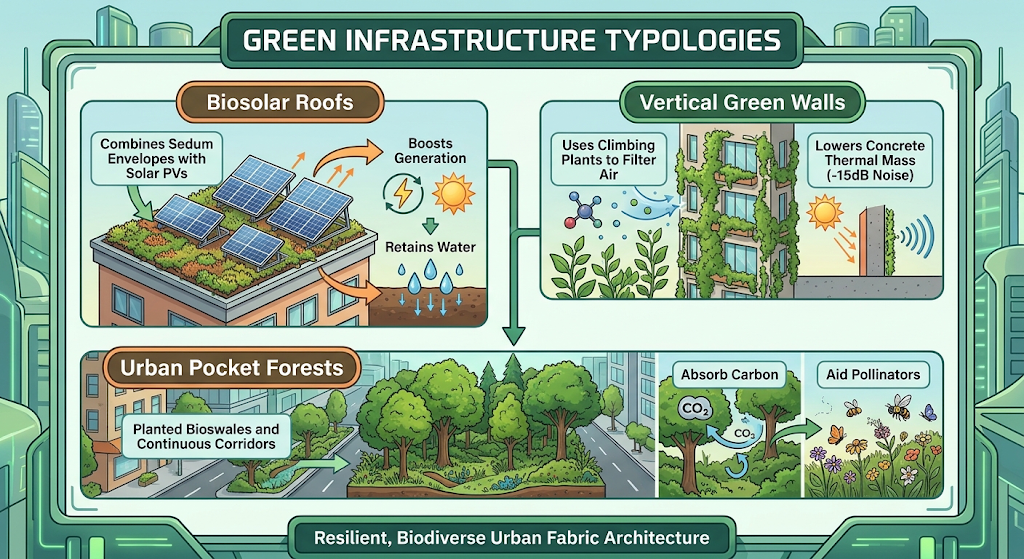
- Biosolar Envelopes: Combining extensive green roofs with solar photovoltaic (PV) arrays. The plants lower ambient surface temperatures via evapotranspiration, which prevents the PV panels from overheating and maximizes renewable energy generation.
- Vertical Green Walls: Training climbing plants or engineering modular living systems on building facades. These installations act as natural acoustic buffers and particulate matter filters, absorbing urban pollutants while shielding concrete from solar heat.
- Urban Pocket Forests: Using dense native tree and shrub planting techniques within small city parcels. These mini-forests maximize localized carbon storage, create deep shade, and increase soil water absorption capacity.
- Vegetated Bioswales: Designing shallow, plant-filled drainage courses to capture initial stormwater surges, filtering out pollutants before they enter local waterways.
Biophysical and Microclimatic Co-Benefits
Transitioning to connected green networks produces a cascade of biophysical benefits across urban communities. From a microclimatic perspective, strategically positioned trees and green walls reduce localized cooling energy demands by physically shading structural surfaces and cooling the surrounding air through transpiration.
From an ecological standpoint, these connected networks counteract habitat fragmentation. By linking backyards, street trees, and public parks into continuous green corridors, cities create essential pathways for birds, small mammals, and urban pollinators. Furthermore, easy access to green urban spaces improves public health by reducing stress and lowering exposure to respiratory irritants.
Mainstreaming Vegetation Assets via Shared Repositories
Scaling these nature-based systems across varying climate zones requires open-access platforms where urban designers, developers, and city planners can share technical data and field observations. The Oppla.eu marketplace functions as a vital repository for sharing nature-based solutions and green infrastructure frameworks across Europe. Oppla hosts technical handbooks, economic evaluation models, and case studies from major international consortia, including the Horizon-funded Nature4Cities and GREEN SURGE initiatives.
By studying these open-access digital repositories, municipal authorities can learn how cities like Leipzig, Poznań, and London successfully integrated green infrastructure guidelines into their legally binding zoning codes and public procurement standards. Adopting these pre-vetted spatial metrics allows local planning departments to avoid common project failures, transforming urban spaces into resilient, biodiverse ecosystems.
Refer to the database overview file 1000125286.jpg to trace how green infrastructure parameters connect with broader climate indicators within the structural catalog of the built environment.
References
Bush, J., & Doyon, A. (2019). Building urban resilience with nature-based solutions: How can urban planning contribute? Cities, 95, 102409. https://doi.org/10.1016/j.cities.2019.102409
Kabisch, N., Frantzeskaki, N., Pauleit, S., Sanyé-Mengual, E., Groschopf, N., Fox-Kämper, R., … & Stadler, J. (2016). Nature-based solutions to climate change mitigation and adaptation in urban areas: Perspectives on indicators, knowledge gaps, barriers, and opportunities for action. Ecology and Society, 21(2), 39. https://doi.org/10.5751/ES-08373-210239
Nature4Cities Project. (2021). Technical applications and evaluation metrics for urban green infrastructure assets. Oppla Repository. https://oppla.eu/nature4cities/green-infrastructure-tools
Pauleit, S., Ambrose-Oji, B., Andersson, E., Anton, B., Buijs, A., Haase, D., Elands, B., Hansen, R., Kowarik, I., Kronenberg, J., & Mattijssen, T. (2019). Advancing urban green infrastructure in Europe: Outcomes and reflections from the GREEN SURGE project. Urban Forestry & Urban Greening, 40, 4-16. https://doi.org/10.1016/j.ufug.2018.10.006
Poznań Municipal Administration. (2022). Poznań Nature-based Solution exemplar Case Study. Oppla Repository. https://oppla.eu/case-study/poznan-nature-based-solution-exemplar-case-study
Raymond, C. M., Berry, P., Breil, M., Nika, A., Khan, M. N., … & de Vreese, R. (2017). Co-benefits of designing and implementing nature-based solutions in cities: An indicator framework. Environmental Science & Policy, 77, 15-24. https://doi.org/10.1016/j.envsci.2017.07.008
Zwierzchowska, A., Hofman, R., & Łaszkiewicz, E. (2021). Nature-based solutions in early childhood education facilities: Terminology, classification and scoring for urban challenges. ResearchGate. https://www.researchgate.net/publication/351656423_Nature-based_solutions_in_the_urban_context_terminology_classification_and_scoring_for_urban_challenges_and_ecosystem_services