Ecosystem-Based Management in the Built Environment
Ecosystem-based management (EBM) is an integrated management approach that considers the entire ecosystem, including humans, to sustain ecological health and deliver essential services. Rather than managing isolated components like a single species or a specific tract of land, EBM focuses on the complex interactions within dynamic ecological systems. When applied to built environments, it demands that urban infrastructure, landscape design, and human activities are harmonized with local ecological processes. This systemic approach is vital for restoring biodiversity, enhancing community resilience, and adapting to climate change. Through open-access knowledge sharing and collaborative ecosystemic research, modern platforms facilitate the widespread adaptation and deployment of EBM frameworks worldwide.
Introduction to Urban Ecosystem-Based Management
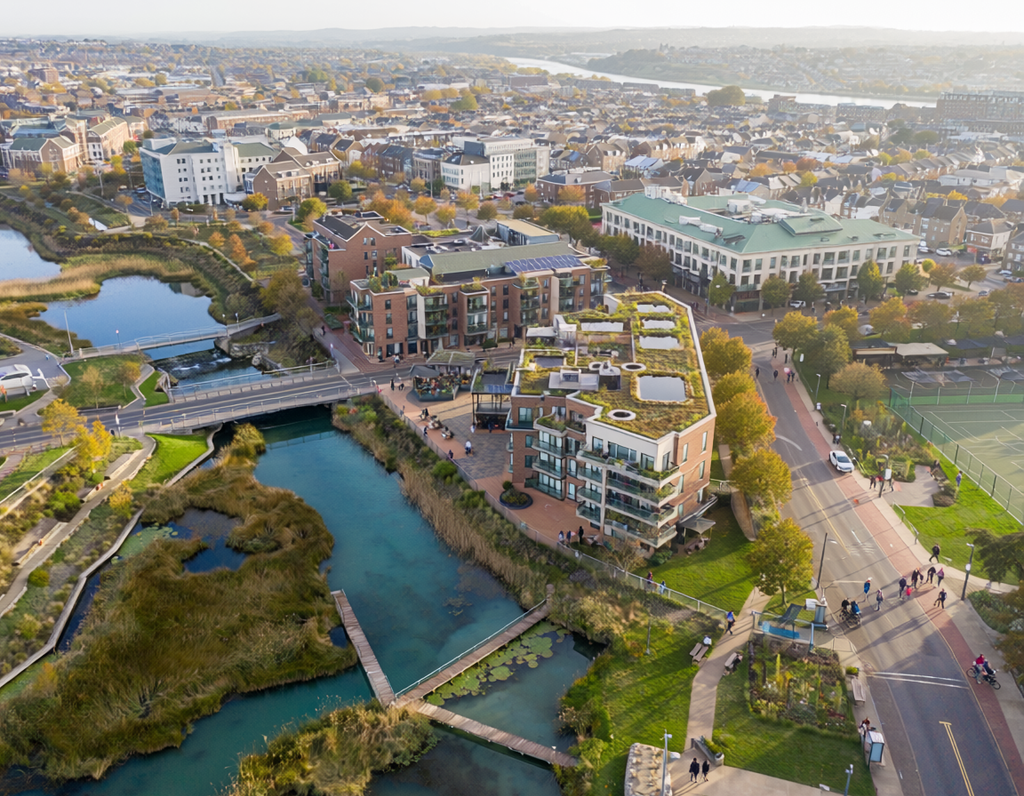
Ecosystem-based management (EBM) is historically rooted in natural resource conservation, where it serves as an holistic approach to managing geographic areas by balancing ecological integrity with human needs. However, as global populations increasingly consolidate within cities, the frontiers of ecosystemic research have expanded into the built environment. In urban centers, EBM functions as a strategic planning framework that treats metropolitan spaces not as sterile, concrete monoliths, but as highly complex, coupled social-ecological systems. Managing built areas through an EBM lens means modifying urban layouts so they actively support, mimic, and interface with natural ecological flows rather than severing them.
Bridging Gray and Green: Methods in the Built Environment
Conventional architecture and civil engineering have long relied heavily on “gray infrastructure”—engineered, single-purpose interventions made of non-natural materials designed to channel away stormwater, wall off natural hazards, or regulate microclimates mechanically. EBM fundamentally challenges this status quo by advocating for a paradigm shift toward “green” and “hybrid” infrastructure systems, which are broadly grouped under the umbrella term Nature-based Solutions (NbS) (Liu et al., 2021).
Integrating EBM methods into the built environment requires a varied set of practices:
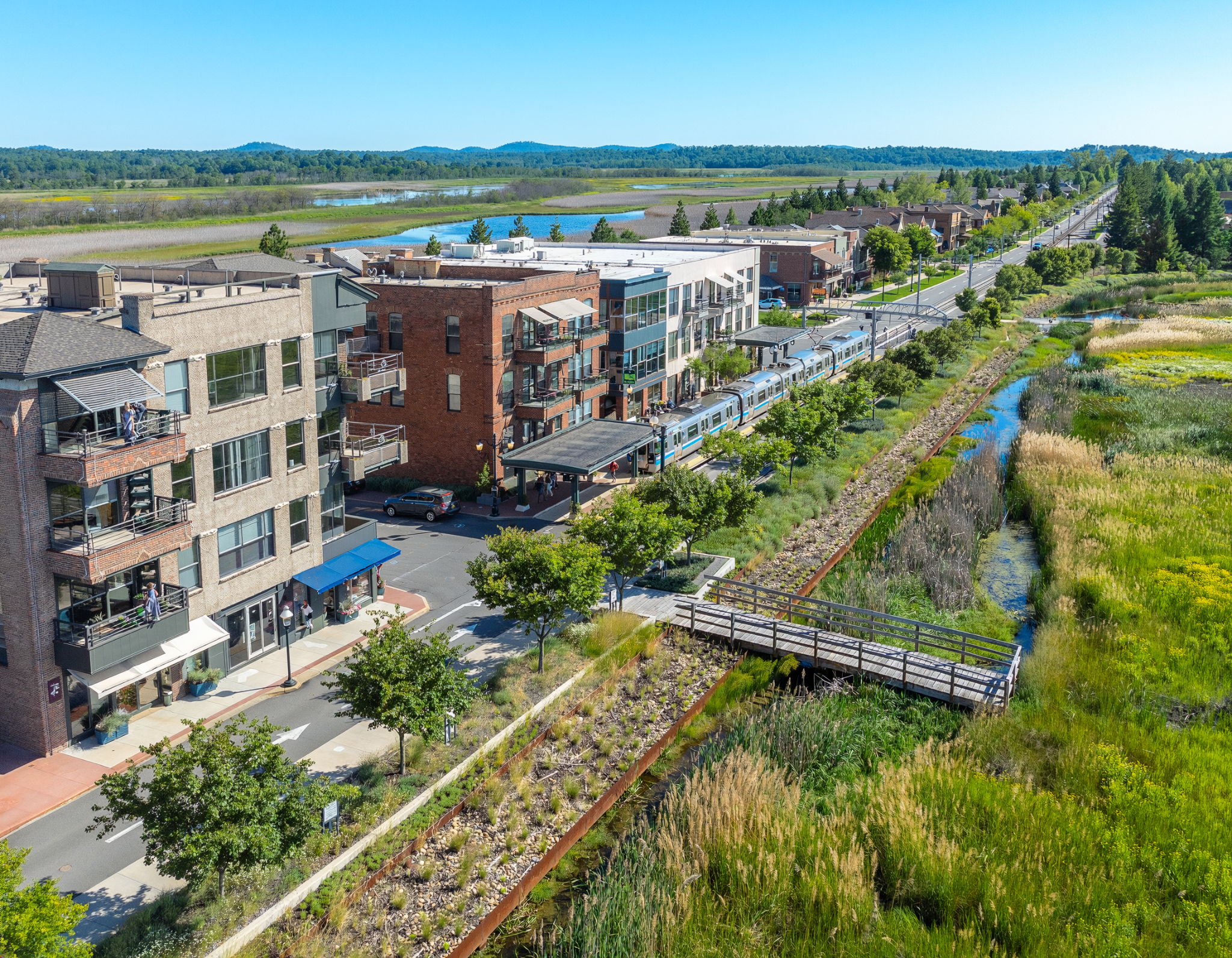
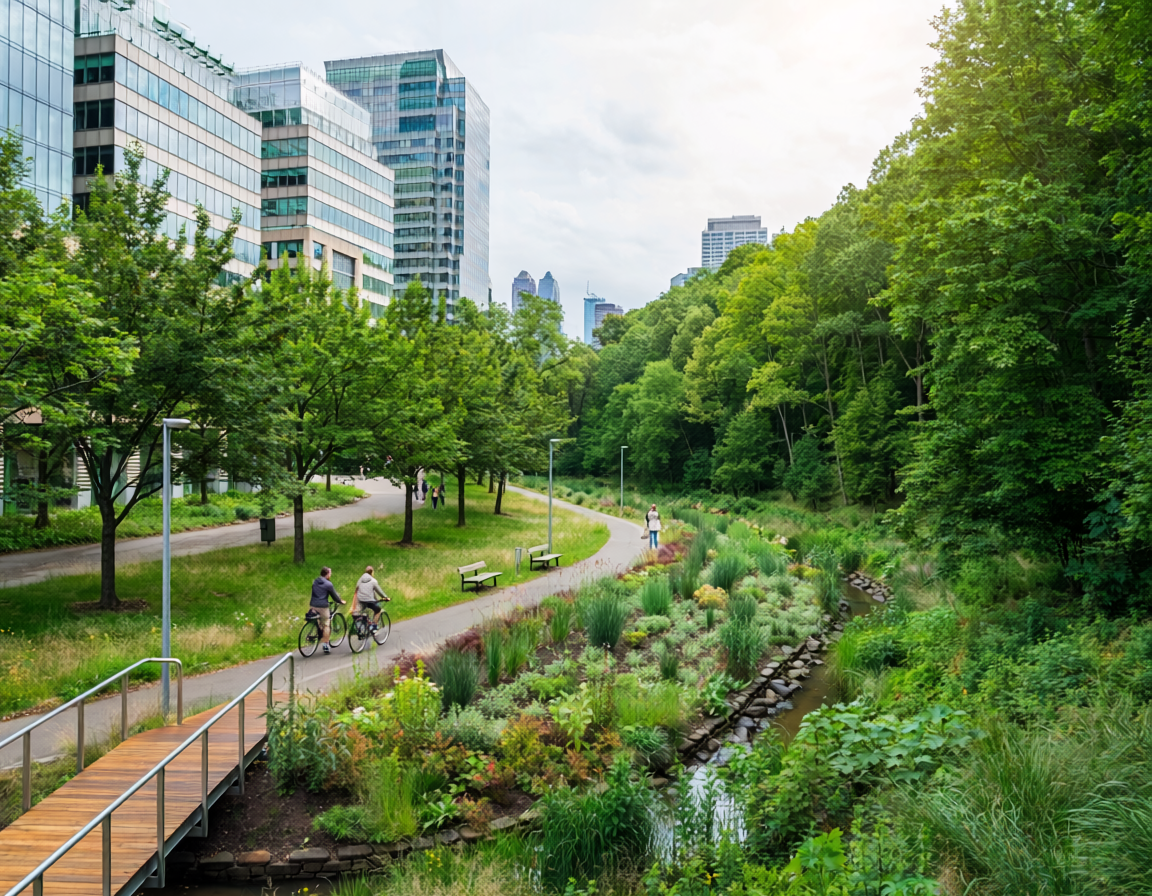
- Permeable Fabric Integration: Replacing traditional asphalt with permeable pavements and installing bioretention swales (wadis) to restore natural sub-surface hydrological loops.
- Vertical and Rooftop Re-Naturing: Deploying extensive green roofs and living walls to mitigate the urban heat island effect and capture airborne pollutants.
- Dynamic Riparian Corridors: Replacing concrete river channels with naturalized floodplains to mitigate disaster risk while establishing wildlife corridors.
These ecological methodologies aim to alter the functional performance of urban landscapes. By deliberately manipulating how buildings and hardscapes engage with local biophysical processes, designers can strategically direct the flow of multi-functional ecosystem services (ES)—such as air purification, thermal comfort, carbon storage, and storm water retention—directly to urban communities (Remme et al., 2024).
[Urban Stressors: Heat, Floods] —> [EBM Intervention: Green Roofs / Wadis] —> [Ecosystem Services: Cooling, Retention]
Ecosystemic Research and Collaborative Frameworks
Scaling EBM from localized, experimental building projects up to regional landscape systems requires robust, collaborative data and continuous ecosystemic research. Historically, the practical deployment of ecological design has suffered from highly fragmented knowledge structures, a lack of universally accepted performance metrics, and a disconnect between academic researchers and real-world urban planners (Liu et al., 2021).
To bridge this operational gap, the European Union has actively funded dedicated repository and networking environments under initiatives like the European Green Deal. A central asset in this space is the open-access platform Oppla.eu, which functions as a virtual hub for nature-based solutions, ecosystem services, and integrated management methodologies (Hussain, n.d.). Platforms such as Oppla consolidate case studies, impact evaluation toolkits, and crowdsourced scientific data from cross-continental Horizon 2020 projects (such as OPERANDUM and NICHES).
Through these collaborative digital ecosystems, modern architects, civil authorities, and environmental scientists can access standardized criteria and indicators to properly measure the long-term cost-effectiveness and performance of EBM solutions across diverse climatic zones (Calliari et al., 2022). This unified knowledge landscape helps eliminate the financial and regulatory barriers that have historically kept systemic ecological infrastructure from being adopted globally as a viable alternative to traditional gray infrastructure.
References
Calliari, E., Castellari, S., Davis, M., Linnerooth-Bayer, J., Martin, J., Mysiak, J., Pastor, T., Ramieri, E., Scolobig, A., Sterk, M., Veerkamp, C., Wendling, L., & Zandersen, M. (2022). Building climate resilience through nature-based solutions in Europe: A review of enabling knowledge, finance and governance frameworks. Climate Risk Management, 37, 100450. https://doi.org/10.1016/j.crm.2022.100450
Cited by: 157
Hussain, S. (n.d.). Socio-Ecological Resilience: ‘Weaving’ to scale Nature-based Solutions. Oppla. https://oppla.eu/sites/default/files/old_files/uploads/Thesis_Socio-Ecological%20Resilience-%20%20%E2%80%98Weaving%E2%80%99%20to%20scale%20Nature-based%20Solutions.pdf
Cited by: 1
Liu, H.-Y., Jay, M., & Chen, X. (2021). The role of nature-based solutions for improving environmental quality, health and well-being. Sustainability, 13(19), 10950. https://doi.org/10.3390/su131910950
Cited by: 151
Remme, R. P., Meacham, M., Pellowe, K. E., Andersson, E., Guerry, A. D., Janke, B., Liu, L., Lonsdorf, E., Li, M., Mao, Y., Nootenboom, C., Wu, T., & van Oudenhoven, A. P. E. (2024). Aligning nature-based solutions with ecosystem services in the urban century. Ecosystem Services, 66, 101610. https://doi.org/10.1016/j.ecoser.2024.101610