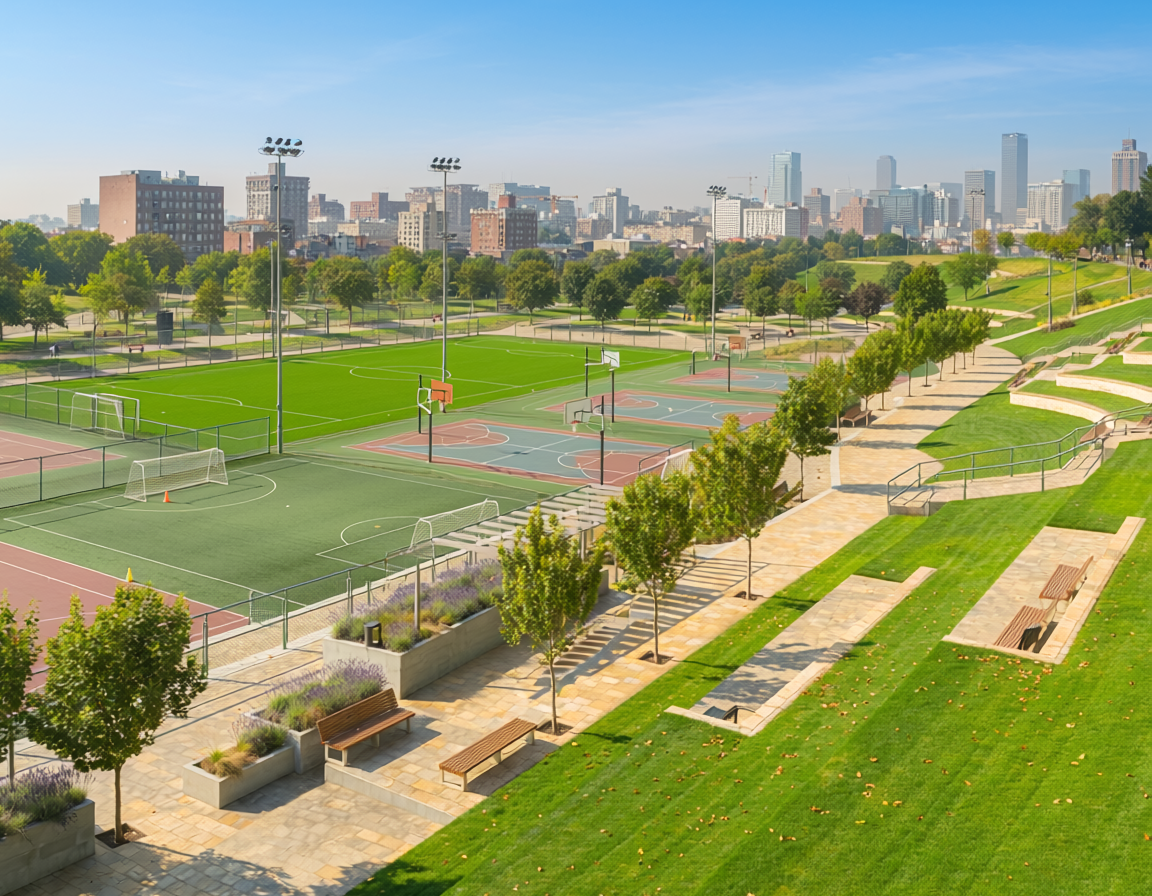
Public health serves as the foundational cornerstone of societal well-being, focusing on preventing disease, prolonging life, and promoting health through organized community efforts. By monitoring health trends, conducting scientific research, and implementing evidence-based interventions, public health professionals work tirelessly to protect communities from infectious outbreaks and chronic conditions. It addresses systemic inequities by advocating for equal access to healthcare, clean resources, and educational programs that empower individuals to make healthier lifestyle choices. Ultimately, public health shifts the medical paradigm from treating individual illness to safeguarding the collective physical, mental, and social vitality of entire populations.

The traditional definition of public health centers on tracking and preventing disease transmission, managing chronic illness, and optimizing clinical interventions at a population level. However, modern ecosystemic research reshapes this paradigm by establishing that human health is inextricably linked to the design, composition, and management of the built environment. Within urban ecosystems, public health acts as an indicator of infrastructural balance. By incorporating Nature-Based Solutions (NbS) into urban design, cities transition from passive backdrops of human activity to active hubs of ecological and physical health, creating an intentional symbiosis between structural engineering and biological systems.
Ecosystemic Research Methods and Platforms
Evaluating how constructed spaces affect human biology requires transdisciplinary methodologies that bridge epidemiology, urban climatology, and landscape architecture. Ecosystemic research relies on tracking tangible health indicators against spatial data, moving beyond self-reported wellness to measurable clinical endpoints. Scientists monitor variations in cardiovascular disease burden, respiratory hospital admissions, and systemic cortisol levels across diverse demographic gradients (James et al., 2014; Sandifer et al., 2015). These clinical trends are then mapped directly to environmental metrics like normalized difference vegetation index (NDVI) values, surface albedo, and microclimate temperature tracking.
Central to advancing these methods are collaborative open-source knowledge repositories. Platforms like Oppla.eu and regional networks such as Go GreenRoutes serve as foundational repositories for sharing scalable, real-world case studies (Cook, 2025). By gathering evidence from global urban nature atlases, these spaces allow researchers to analyze how distinct structural elements—ranging from macro-level urban forests to targeted architectural expansions like green walls and roofs—impact human longevity and disease mitigation.
Mechanisms of Health Mitigation in Built Spaces
The physical structures where people live and work dictate their daily environmental exposures. Well-designed nature-based infrastructure intercepts and filters airborne particulate matter ($PM_{2.5}$ and $PM_{10}$), providing a vital structural barrier that lowers the incidence of chronic respiratory illnesses (Cooper, 2021). Furthermore, dense concrete networks generate severe urban heat islands, raising local temperatures and increasing heat-related cardiovascular strain during climate anomalies.
Integrating structural vegetation alters the local microclimate. Urban foliage reduces ambient temperatures via evapotranspiration, mitigating thermal stress and reducing climate-driven mortality spikes. Beyond chemical and thermal remediation, the spatial layout of the built environment dictates physical movement. Interconnected green corridors, walkable public parks, and multi-functional open spaces prompt spontaneous physical exercise, altering local metabolic profiles and directly combating the global rise of non-communicable, lifestyle-related conditions.
Systemic Challenges and Equity
A major challenge in deploying nature-based health infrastructure within the built environment is avoiding unintended eco-gentrification. Large-scale, highly visible greening projects frequently attract luxury developments, driving up housing costs and displacing the marginalized, working-class communities who bear the heaviest burdens of legacy industrial pollution (Curran & Hamilton, 2020). Ecosystemic research underscores that public health improvements are only meaningful if they are equitably distributed. To achieve true systemic resilience, city practitioners must prioritize small-scale, decentralized ecological interventions directly within dense, under-resourced residential sectors, ensuring that health-promoting infrastructure supports the populations that need it most.
References
Cook, E. M. (2025). Nature-based solutions for urban sustainability. Proceedings of the National Academy of Sciences (PNAS), 122(28), e2315909122.
Cited by: 26
Cooper, C. (2021). Nature-based solutions and health outcomes. NetworkNature, 1–4. https://networknature.eu/networknature/article/nature-based-solutions-and-health-outcomes
Curran, W., & Hamilton, T. (2020). Nature-based solutions in hiding: goslings and greening in the still-industrial city. Socio-Ecological Practice Research, 2(4), 321–327. https://doi.org/10.1007/s42532-020-00064-1
Cited by: 23
O’Hogain, S., & McCarton, L. (2018). Nature-based solutions. A Technology Portfolio of Nature Based Solutions, 1–9. Springer International Publishing. https://doi.org/10.1007/978-3-319-73281-7_1
Cited by: 180