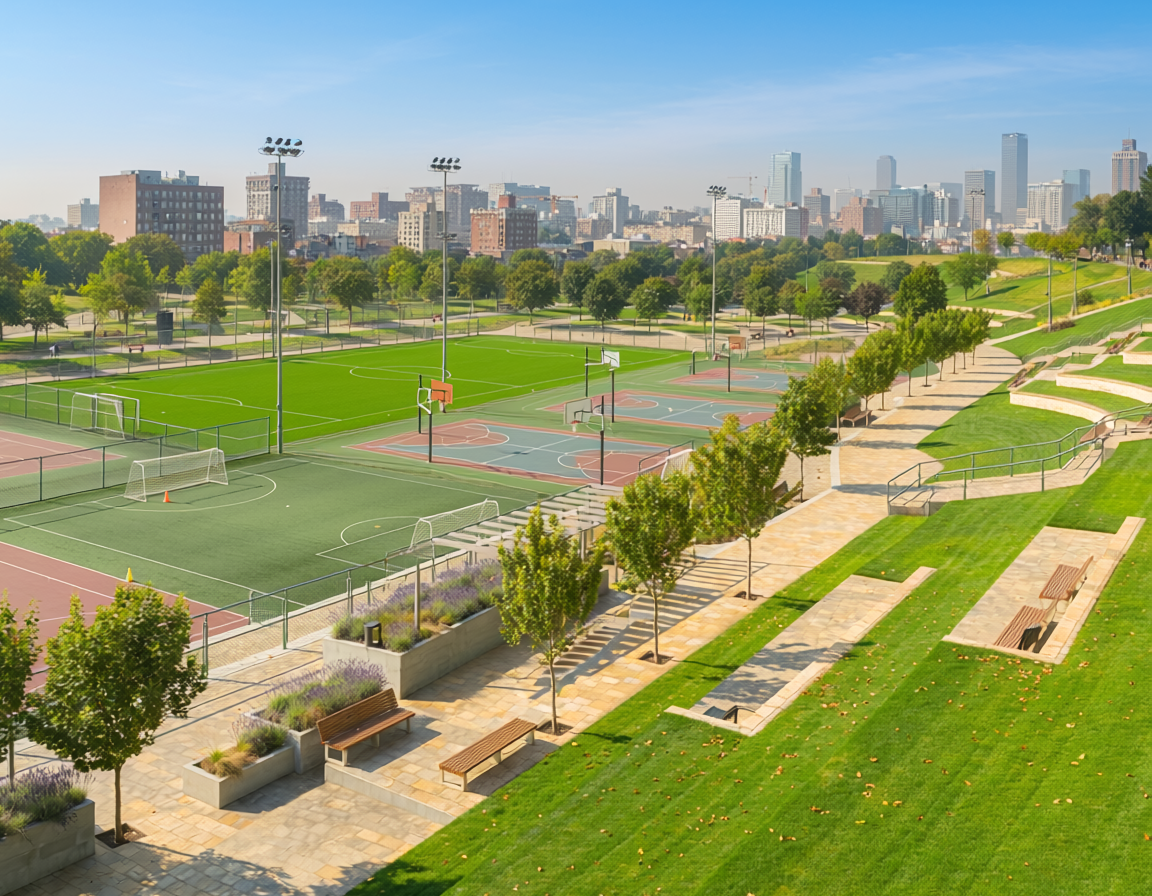
In contemporary architectural theory and metropolitan design, recreation has shifted from an uncoordinated leisure attribute to an essential, multi-functional component of city infrastructure. Within the context of the built environment, recreational spaces encompass diverse natural and hybrid networks—ranging from comprehensive green corridors and restored riverbanks to small community parks and integrated sports facilities. These layouts are designed to support public physical fitness, cognitive recovery, and social intersection.
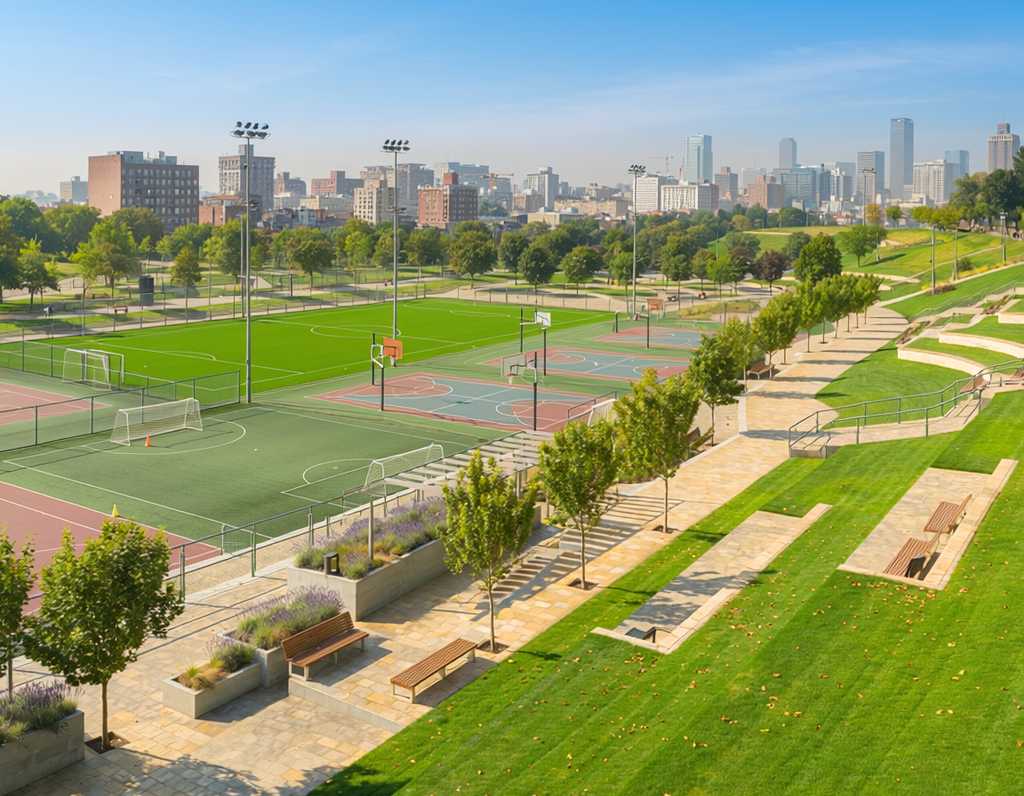
Historically, dense urban cores were engineered primarily for industrial efficiency, vehicular transportation, and rigid gray containment, which isolated natural landscapes to peripheral boundaries. Modern ecological planning requires replacing these monocultural networks with multifunctional nature-based solutions. When leisure zones are interwoven into urban frameworks, they alter the mechanical properties of the concrete landscape. This design strategy breaks up massive gray developments with porous, vegetated spaces that alleviate the psychological strain of crowded cities while providing vital municipal climate resilience.
[Dense Urban Center] ──(Green Corridors)──> [Multi-Functional Public Park] ──> [Psychological & Physical Well-Being]
Methods and Ecosystemic Research
To measure and optimize the direct health benefits of public spaces, environmental scientists utilize quantitative ecosystemic research methods. These research models evaluate how people interact with biological systems to extract continuous cultural ecosystem services, focusing primarily on public health, psycho-physical well-being, and urban resilience.
Contemporary empirical investigations leverage specialized frameworks to design resilient, human-centered public areas:
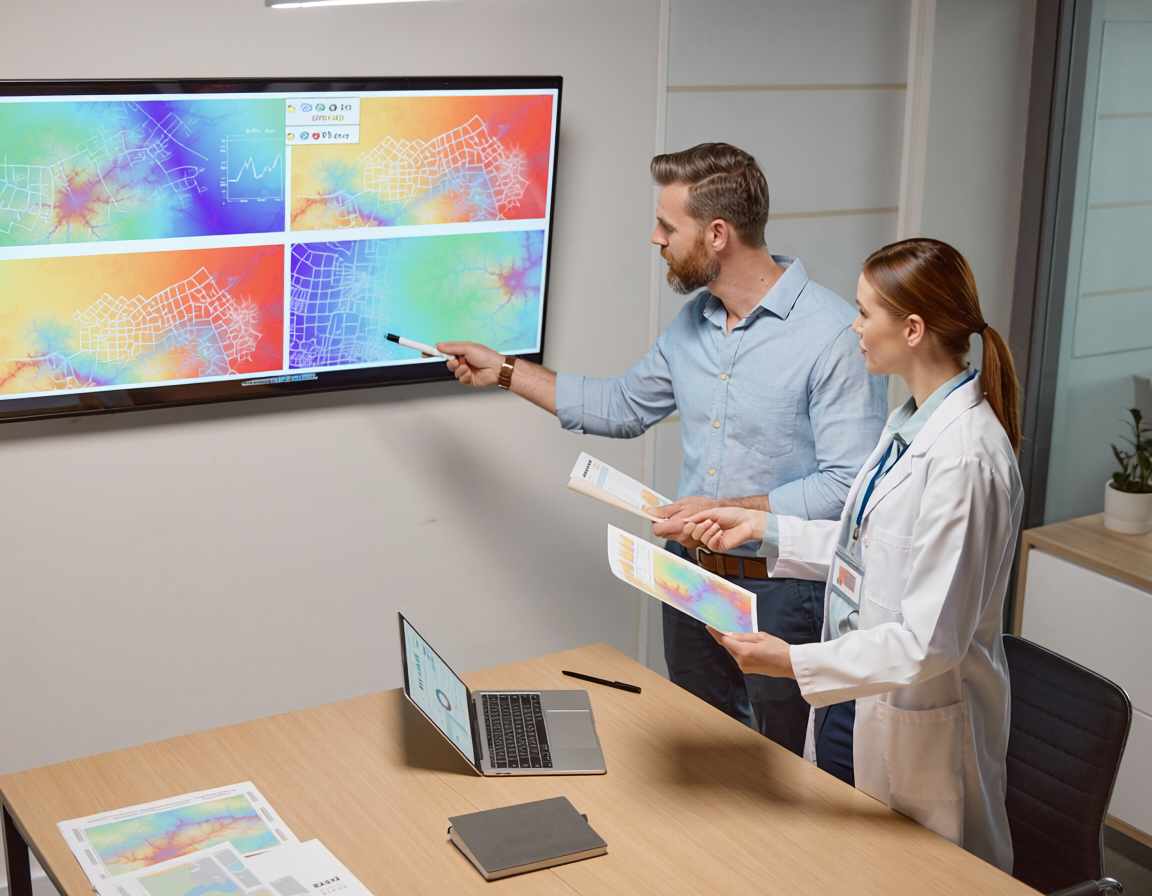
- Spatial Distribution and Accessibility Indexing: Researchers combine Geographic Information Systems (GIS) with network analysis to calculate localized walking distances to leisure zones. For instance, dynamic municipal strategies utilize detailed mapping models to ensure that every resident lives within a five-minute walk to a high-quality recreational park, maximizing daily active mobility.
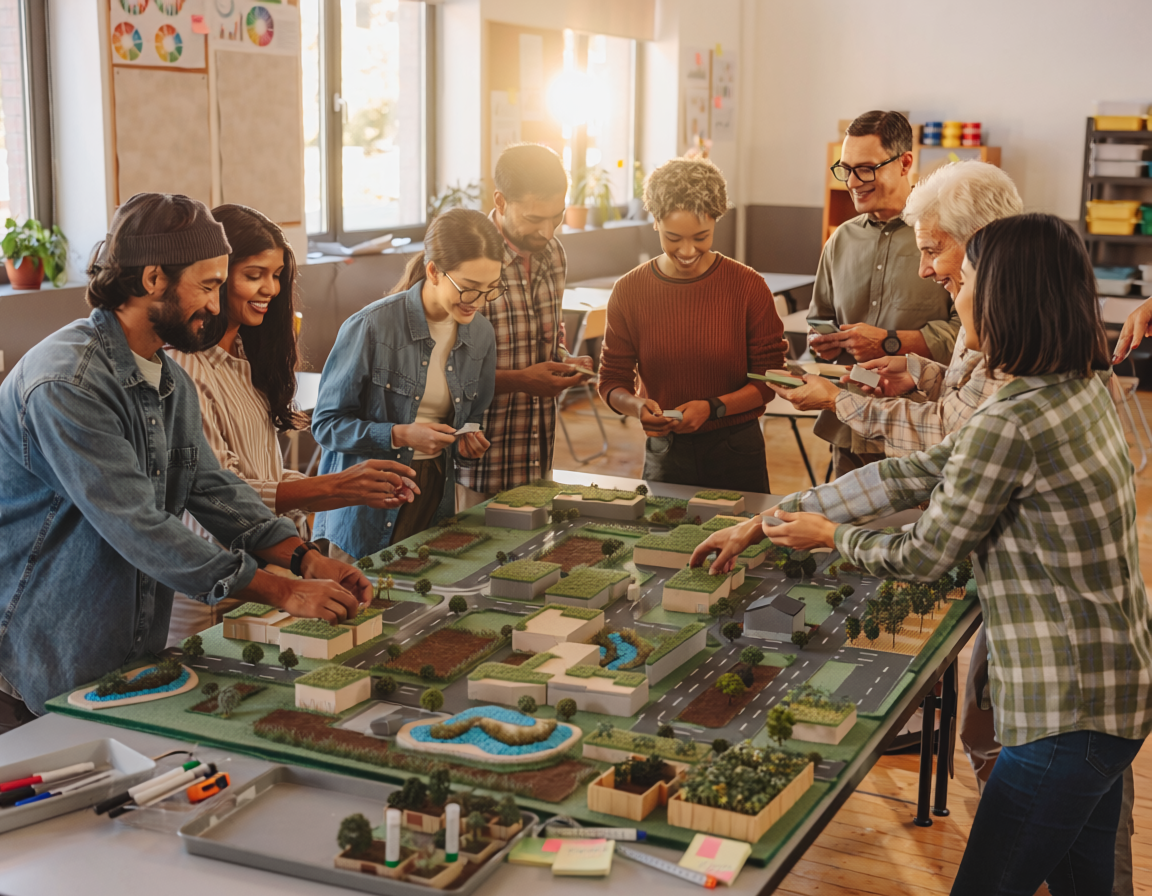
- Post-Occupancy Behavioral Auditing: Landscape architects monitor real-world park interactions using non-intrusive field observations. Studies show that when parks fail to incorporate inclusive, age-friendly design principles, spatial conflicts often arise between different users, such as elderly walkers and fast cyclists, which can lower overall neighborhood participation.
- Carrying Capacity and Stress Testing: Environmental scientists evaluate the physical threshold of active zones to determine how heavy foot traffic impacts local natural resources. Planners analyze soil compaction, vegetation damage, and regional wildlife habits to design durable walking pathways that withstand heavy communal use while safeguarding localized ecosystem functions.
The Role of Knowledge Platforms: Incorporating Oppla.eu
Scaling recreational greening from isolated neighborhood initiatives to entire metropolitan grids depends heavily on open-access repositories. The Oppla.eu community hub serves as a primary European knowledge network for Nature-Based Solutions (NbS), providing municipal engineers, urban planners, and environmental scientists with field-tested toolkits and reference frameworks.
Case studies documented across these collaborative networks demonstrate how cities can combine active public recreation with ecosystem preservation. For example, the Oradea NbS Quality of Life initiative showcases how a city can transform over ten thousand square meters of neglected urban land into public leisure parks and sports fields, directly reducing neighborhood social fragmentation.
| Recreational Asset | Design Adaptation | Primary Socio-Ecological Co-Benefit |
| Active Green Corridors | Continuous pedestrian and cycling lanes separated from vehicular traffic grids. | Promotes non-motorized transport; improves regional air quality. |
| Multi-Tiered Public Parks | Segmented spatial zones separating high-impact sports fields from quiet rest areas. | Resolves user conflicts; ensures inclusive access for vulnerable demographics. |
| Peri-Urban Protected Forests | Controlled concession systems and voluntary funding boxes for athletic events. | Generates infrastructure revenue while monitoring ecological soil compaction. |
Similarly, regional projects like the Medvednica Forest Ecosystem Services initiative utilize structured permitting systems for large sports events within protected natural parks. By channeling permit fees directly back into maintenance funds for items like Nordic walking trails, the framework balances heavy public recreational demand with strict biodiversity conservation targets. These open platforms bridge the gap between abstract ecosystem research and physical landscape design, helping modern cities transition toward equitable and spatially just green infrastructure systems worldwide.
References
- Barna, C., Morar, T., & Pacurar, L. (2017). Oradea – Improving quality of life with NbS. Oppla Case Study Repository. Oppla Case Profile.
- Gallo, P., et al. (2024). Nature-Based Solutions to Enhance Urban Resilience in the Climate Change and Post-Pandemic Era: A Taxonomy for the Built Environment. MDPI Buildings. MDPI Open Access.
- Iojă, I. C., et al. (2020). Too Old for Recreation? How Friendly Are Urban Parks for Elderly People? MDPI Sustainability. MDPI Direct Open Access.
- SINCERE Project. (2021). Understanding the health functions of peri-urban forests in protected areas and Payment for Ecosystem Services. Oppla Case Study Database. Oppla Forest Management Profile.
- Wang, J., & Zhang, L. (2026). Nature-Based Solutions in Urban Regeneration: A Review of Methods, Governance, and Future Directions. MDPI Urban Science. MDPI Article Source.
- Zheng, H., & Alatalo, J. M. (2025). Nature-Based Solutions in Urban Green Infrastructure: A Systematic Review of Success Factors and Implementation Challenges. MDPI Land. MDPI Land Repository.