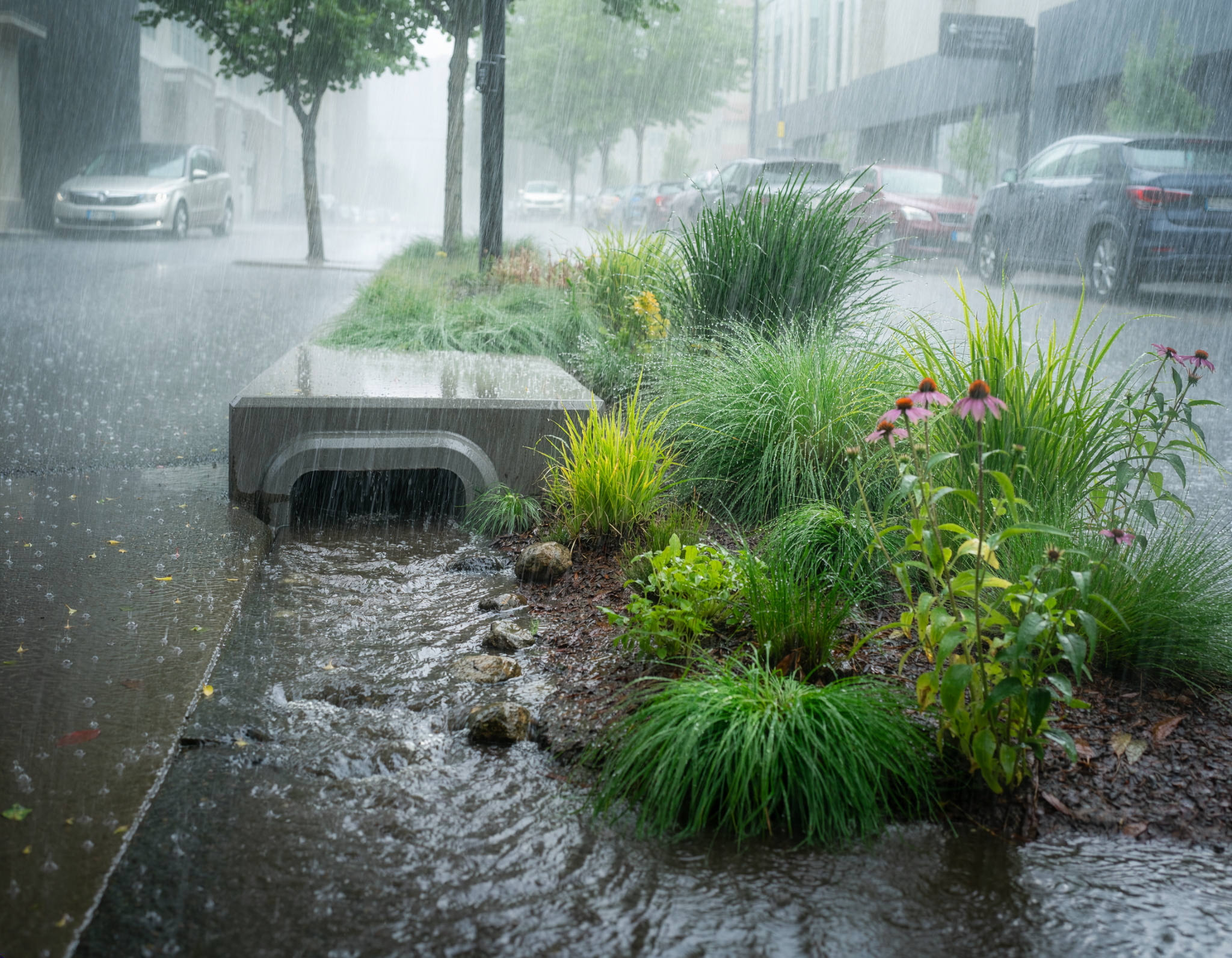
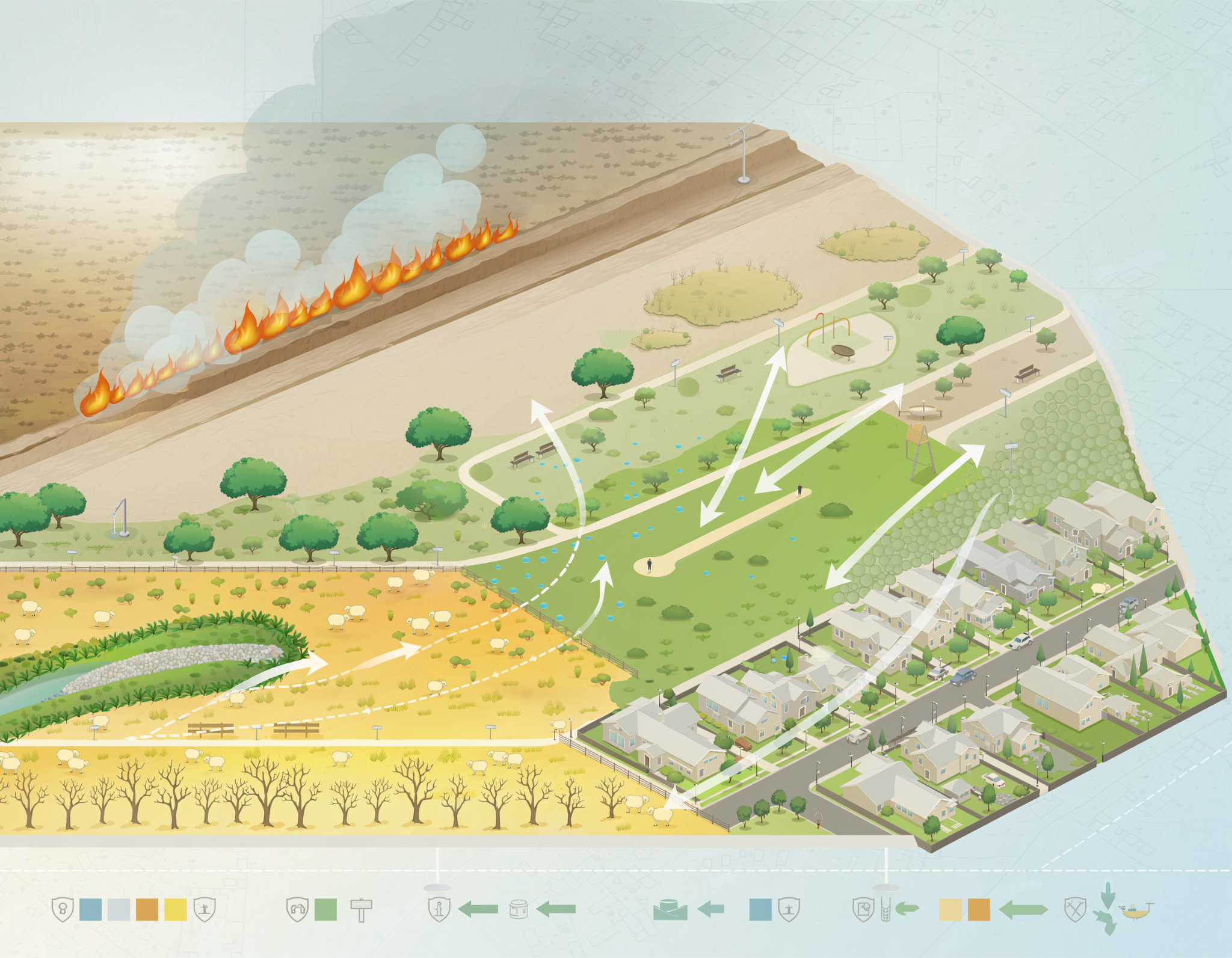
Air quality and local climate regulation represent interrelated ecosystem services through which natural infrastructure directly alters atmospheric conditions within human settlements. Urban greening elements function as critical chemical and thermal regulators, absorbing airborne pollutants and lowering ambient air temperatures via continuous evapotranspiration.
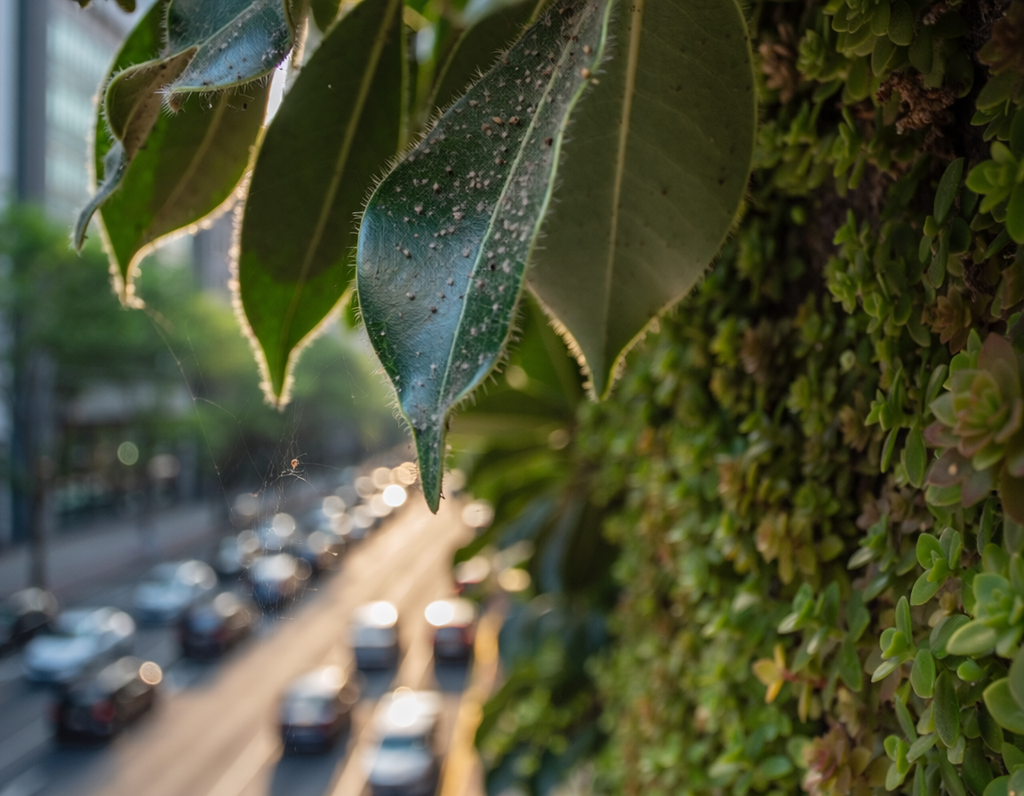
By intercepting shortwave solar radiation and acting as particulate filters, these living systems mitigate the urban heat island effect and dilute concentrated pockets of vehicular emissions. However, their atmospheric regulatory performance is highly dependent on structural geometry, localized wind flow dynamics, and specific plant trait selections. When deployed strategically, these natural regulatory buffers safeguard public health and buffer high-density neighborhoods against localized climate extremes.
Defining Air Quality and Local Climate Regulation within the Built Environment
In sustainable metropolitan engineering and urban climatology, air quality and local climate regulation describe the capacity of integrated biophysical systems to actively modify the thermal, moisture, and chemical profiles of the boundary layer atmosphere. Within the built environment, these regulating ecosystem services represent a proactive defense mechanism against the environmental stressors inherent to high-density gray infrastructure. Instead of treating microclimate management as a detached mechanical ventilation challenge, modern architectural design treats the urban fabric as an open thermodynamic system regulated by green
[Urban Pollutants & Heat Radiated from Asphalt] ──> [Vegetative Deposition & Evapotranspiration] ──> [Filtered Air & Cooled Microclimate]
Historically, the widespread deployment of impermeable materials like asphalt and concrete has exacerbated the urban heat island (UHI) phenomenon, while street geometry creates “urban canyons” that trap harmful pollutants like nitrogen dioxide ($\text{NO}_2$) and fine particulate matter ($\text{PM}_{2.5}$). Strategically embedding nature-based solutions (NBS) reconfigures these microclimates. By combining vegetative canopies, pocket green spaces, and green walls, planners can intercept solar radiation before it hits hard surfaces, reducing localized air temperatures and altering wind fields to dilute and scatter trapped pollutants.
Methods and Ecosystemic Research
To measure, simulate, and enhance these atmospheric regulations, environmental scientists utilize quantitative ecosystemic research methods that track heat fluxes and pollutant removal rates within built layouts.
Modern research teams deploy several specialized methodologies to assess atmospheric regulation:
- Computational Fluid Dynamics (CFD) and Microclimate Modeling: Engineers use advanced microclimate software like ENVI-met to model wind flow and thermal exchanges in street canyons. This research confirms that optimizing crown density and tree positioning can significantly improve outdoor thermal comfort and lower the Physiological Equivalent Temperature (PET) along pedestrian paths.
- Dry Deposition and Particulate Auditing: Environmental scientists measure the physical accumulation of pollutants on leaf surfaces. Utilizing tools like the i-Tree Eco suite, researchers quantify how specific leaf micro-morphologies—such as rough surfaces or trichomes (leaf hairs)—effectively capture and remove fine particulate matter from localized air streams.
- Eddy Covariance and Sensor Mesh Tracking: Climatologists deploy dense networks of internet-of-things (IoT) micro-sensors alongside eddy covariance towers to record real-time changes in humidity, ambient temperature, and gas concentrations. This field data proves that contiguous green zones exert a strong cooling effect that extends deep into surrounding built blocks.
The Role of Knowledge Platforms: Incorporating Oppla.eu
Scaling these environmental regulatory mechanisms from isolated experiments into regional zoning codes requires open-access knowledge bases. The Oppla.eu repository serves as a primary European network for nature-based solutions, providing planners with empirical toolkits, case studies, and policy frameworks for managing urban microclimates.
A core focus within the data shared across these networks is avoiding unintended negative impacts on air quality due to poor spatial configuration. For example, urban greening briefs on Oppla point out that planting tall, dense tree canopies in very narrow, high-traffic street canyons can actually trap vehicular exhaust at ground level by blocking ventilation. To prevent this, planners use multi-layered green infrastructure matrices to balance cooling and airflow:
| Regulatory Application | Structural Implementation Strategy | Primary Atmospheric Yield |
| Ventilated Cooling Corridors | Planting low-stature vegetation and scattered, high-crown trees along wind paths. | Drives natural wind circulation; prevents stagnant heat and pollutant accumulation. |
| High-Surface Bio-Filters | Integrating extensive green walls and bio-swales near traffic emission hotspots. | Maximizes particulate deposition; filters fine dust and heavy metals locally. |
| Macro Canopy Buffers | Preserving large, continuous peri-urban forests and multi-tiered municipal parks. | Stabilizes regional humidity and lowers peak urban heat island temperatures. |
By applying open-source design strategies from integrated European urban greening handbooks, municipal agencies can move away from treating air and heat regulation as isolated issues. Instead, they can integrate natural regulation directly into urban planning blueprints, using green infrastructure as a functional cooling and filtration network to build healthy, climate-resilient cities.
References
- European Commission. (2025). Handbook of tools for informing and monitoring urban greening strategies and nature plans. Knowledge Centre for Biodiversity / BioAgora. BioAgora Resource Library.
- Nouri, A., & Matzarakis, A. (2026). Parametric Analysis of Tree Canopy Density and Vegetation Cover on Thermal Comfort and Wind Flow in Urban Green Areas. MDPI Climate, 2(2), 12. MDPI Open Access.
- Oppla.eu / Climate-ADAPT. (2021). OPPLA – Information hub for nature-based solutions. European Environment Agency. Climate-ADAPT Info Profile.
- Oppla.eu. (2019). Resource Repository: Managing regulating ecosystem services within dense urban cores. Oppla Resource Hub.
- Ouhaddou, H., et al. (2026). Ecophysiology and Ecosystem Services of Olive Trees in a Semi-Arid Urban Environment. MDPI Vegetation, 57(1), 2. MDPI Open Access.
- Scottish Natural Heritage / NatureScot. (2025). Nature-based solutions: Urban. NatureScot Guide.
- Silva, R., & Hoffman, M. (2025). Microclimate Analysis of Tree Canopies and Green Surface Combinations for Urban Heat Island Mitigation. Buildings, 15(9), 1573. ResearchGate Repository.
- Zhang, J., et al. (2025). Cooling efficacy of trees across cities is determined by background climate, urban morphology, and tree trait. Urban Forestry & Urban Greening. ResearchGate Preprint.