Renewable energy transformation within the built environment requires a structural shift beyond isolated technological installations.
Integrating clean energy generation directly into organic systems optimizes resource yields while supporting local ecological balances.
Advanced ecosystemic methodologies view building envelopes as active thermodynamic planes capable of producing power and filtering air.
By combining solar arrays with living infrastructure, modern municipalities maximize real-world efficiency and build urban resilience.
Ultimately, embedding decentralized green power networks into structural frameworks secures a sustainable and low-carbon urban future.
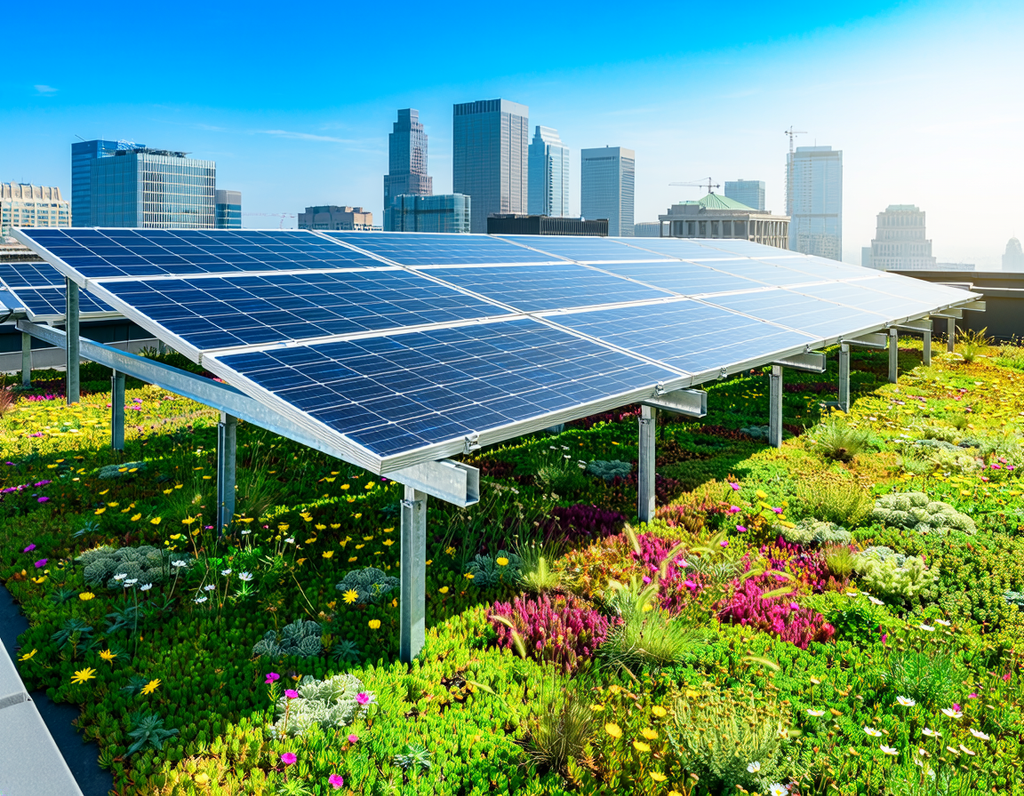
What to look for in the visual: Notice how the photovoltaic (PV) panels are elevated directly over an active wildflower and sedum canopy. Rather than installing panels on an artificial bituminous surface that absorbs intense heat, this layout utilizes the plants’ continuous transpiration to stabilize ambient temperatures, boosting solar cell efficiency while supporting local insect populations.
The Symbiosis of Renewable Energy and Nature-Based Solutions
The transition toward high-performance, carbon-neutral cities requires structural engineering to move past treating clean power generation and urban ecology as isolated, competing priorities. In traditional urban planning, the deployment of decentralized renewable energy systems—such as building-integrated photovoltaics (BIPV)—frequently competes for valuable horizontal surface space with green infrastructure mandates. However, contemporary ecosystemic research has challenged this binary trade-off by introducing multi-functional architectural methods. By treating building envelopes as dynamic, socio-ecological interfaces, modern practitioners are successfully combining biological systems with clean technology to create highly resilient, regenerative urban microclimates.
The most prominent example of this operational integration is the development of advanced biosolar roofs, a hybrid framework that installs solar panel arrays directly on top of biodiverse living roofs. Historically, placing solar modules on standard dark, heat-absorbing bituminous roofing materials resulted in extreme summertime surface temperatures exceeding 90°C. Because the power conversion efficiency of conventional silicon photovoltaic cells decreases significantly as ambient temperatures rise, hot microclimates actively suppress clean energy yields. According to data compiled on specialized biosolar research databases, integrating a living vegetative underlay counters this thermal degradation by maintaining a cooler, stable microclimate through continuous plant evapotranspiration. This natural cooling mechanism can optimize solar panel performance, increasing net electricity generation by approximately 10% to 20% compared to conventional grey installations.
Ecosystemic Co-benefits and Lifecycle Design
Beyond pure thermodynamic optimization, combining green infrastructure with renewable energy installations yields a robust bundle of ecological and structural services. The elevated framing of modern solar modules provides a diverse range of shaded and sun-exposed micro-habitats, supporting a wider selection of drought-resistant wildflower and sedum species. Technical performance briefs for integrated photovoltaic mounting solutions demonstrate how these systems use the weight of the growth substrate and plant biomass as structural ballast, eliminating the need to puncture the building’s primary waterproofing membrane. This symbiosis actively captures airborne dust particles, keeping the solar cells cleaner and reducing municipal maintenance costs over a lifetime exceeding thirty years.
Evaluating the multi-criteria benefits of these configurations requires rigorous municipal tracking tools. Platforms like Oppla.eu compile empirical case studies and pilot initiatives, such as cross-sectoral green deal partnerships, aimed at removing financial and regulatory barriers to large-scale green roof implementation. These open-access repositories help municipal authorities, private developers, and financial entities validate the multi-criteria benefits of nature-positive infrastructure. Furthermore, global reviews from organizations like the Global Infrastructure Hub highlight that scaling up nature-based infrastructure can provide over a third of the total emissions reductions needed to hit global climate neutrality targets. By codifying these shared data networks into unified local zoning codes and building parameters, the future built environment can successfully transform standard urban surfaces into highly efficient, circular power plants.
References
- Biosolar Roofs Consortium. (2026). Biosolar roofs: Best practice, research, guidelines, and technology. Biosolar Roofs Information Portal. Biosolar Hub
- Bauder Solar Technical Team. (2025). Integrated Photovoltaic Mounting Systems for Vegetated Roof Finishes. Bauder Product Sustainability Briefs. Bauder UK
- Oppla. (2024). GREEN DEAL Green roof: Upscaling cross-sectoral revenue models around roof greening. Oppla Case Studies Repository. Oppla Portal
- Global Infrastructure Hub (GI Hub). (2023). What are nature-based solutions for infrastructure? GI Hub Climate Transitions. GI Hub Resource