Integrated Forest Management: Synthesizing Ecosystemic Research and Built Environment Infrastructure
Integrated forest management serves as a multi-functional framework designed to balance timber production with biodiversity conservation, climate adaptation, and the protection of water resources. When translated into the built environment, this methodology shifts the focus toward urban forestry and continuous canopy cover to actively regulate local microclimates. By viewing trees as critical grey-green infrastructure, ecosystemic research assesses how integrated silvicultural practices directly mitigate urban heat and control stormwater runoff. Consequently, platforms like Oppla.eu facilitate cross-sector collaboration, offering design guidelines that treat managed canopies as structural and biological extensions of modern city spaces. This unified strategy ensures that forest preservation is intrinsically woven into regional spatial planning, urban growth boundaries, and municipal sustainability targets.
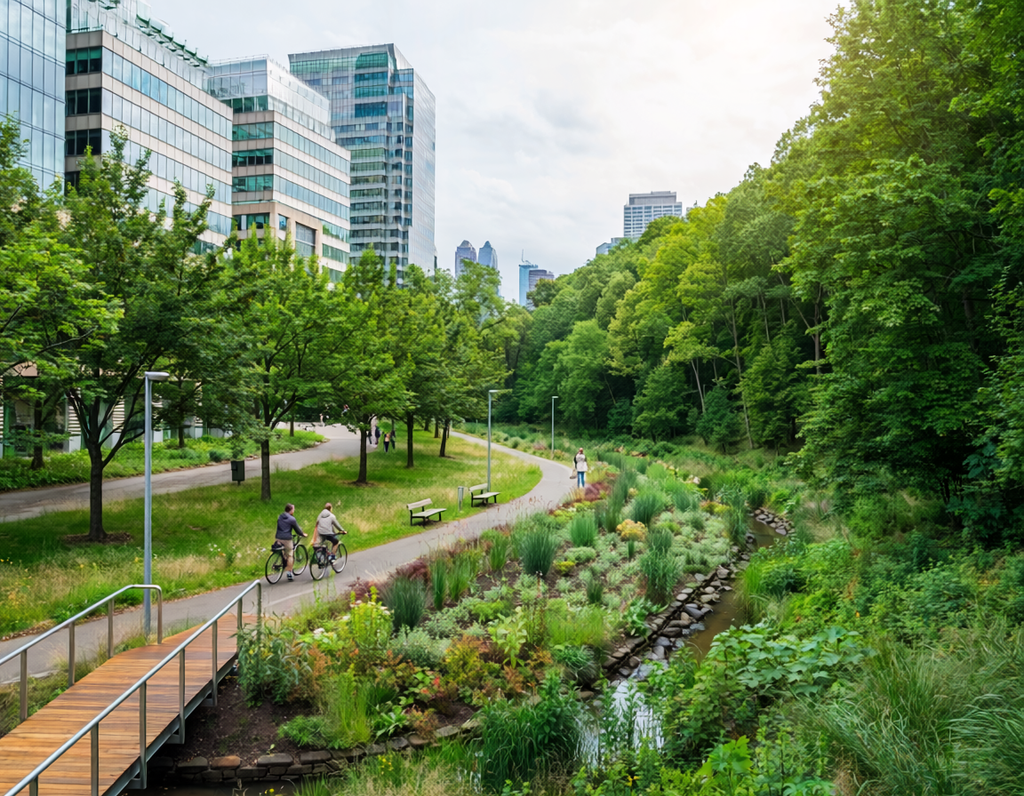
The expansion of urban landscapes requires a fundamental paradigm shift in how we design, build, and maintain ecological systems within human-dominated territories. Historically, forestry practices and architectural master planning operated as isolated disciplines. Today, contemporary ecosystemic research has bridged this gap through integrated forest management (IFM)—a holistic approach that balances ecological, socio-cultural, and economic forest values over time and across space (MDPI, 2010). In the context of the built environment, IFM extends beyond traditional silviculture, transforming urban woodlands and continuous canopies into essential, multi-functional infrastructure (Resilience Blog, 2021). By exploring knowledge platforms like the Oppla.eu repository, urban planners can access collaborative data that treats managed forests not merely as cosmetic park spaces, but as operational systems engineered to optimize biodiversity and urban climate resilience.
The Structural Intersection of Forests and Urban Spaces
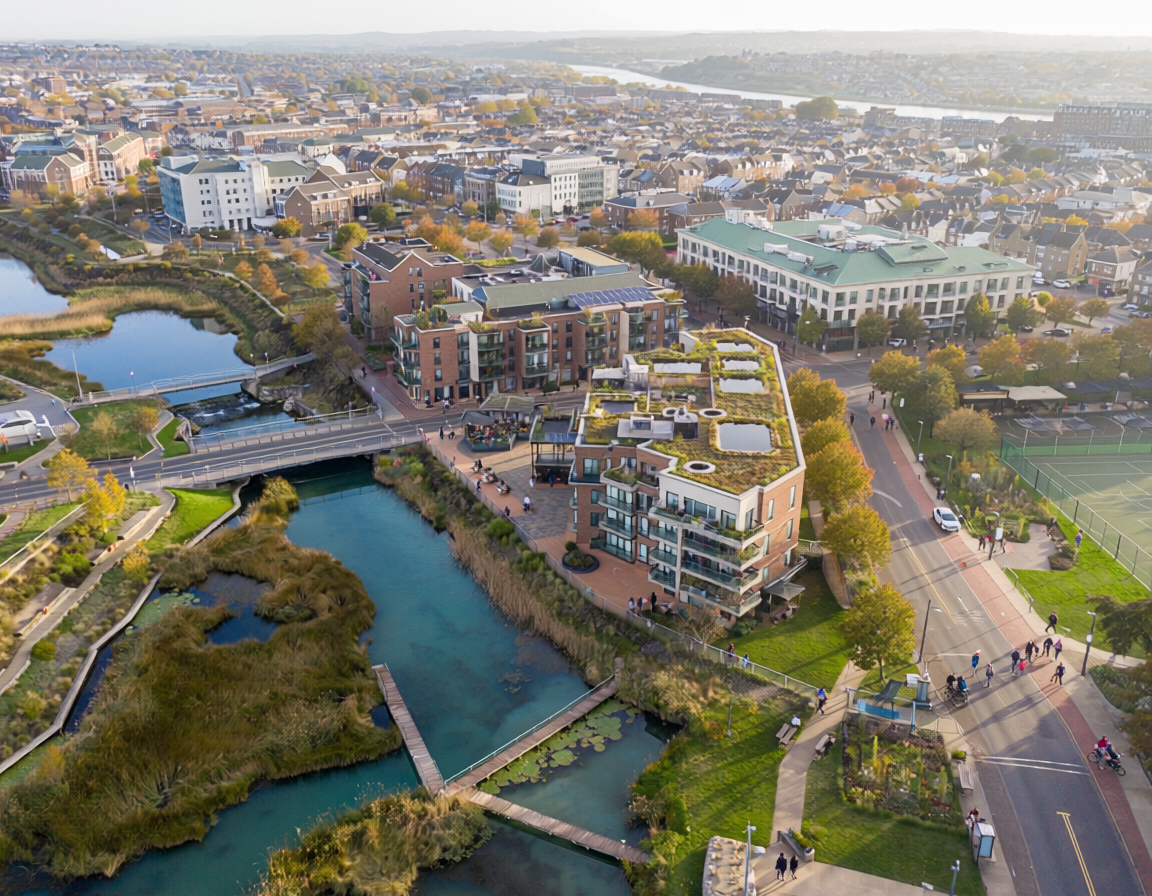
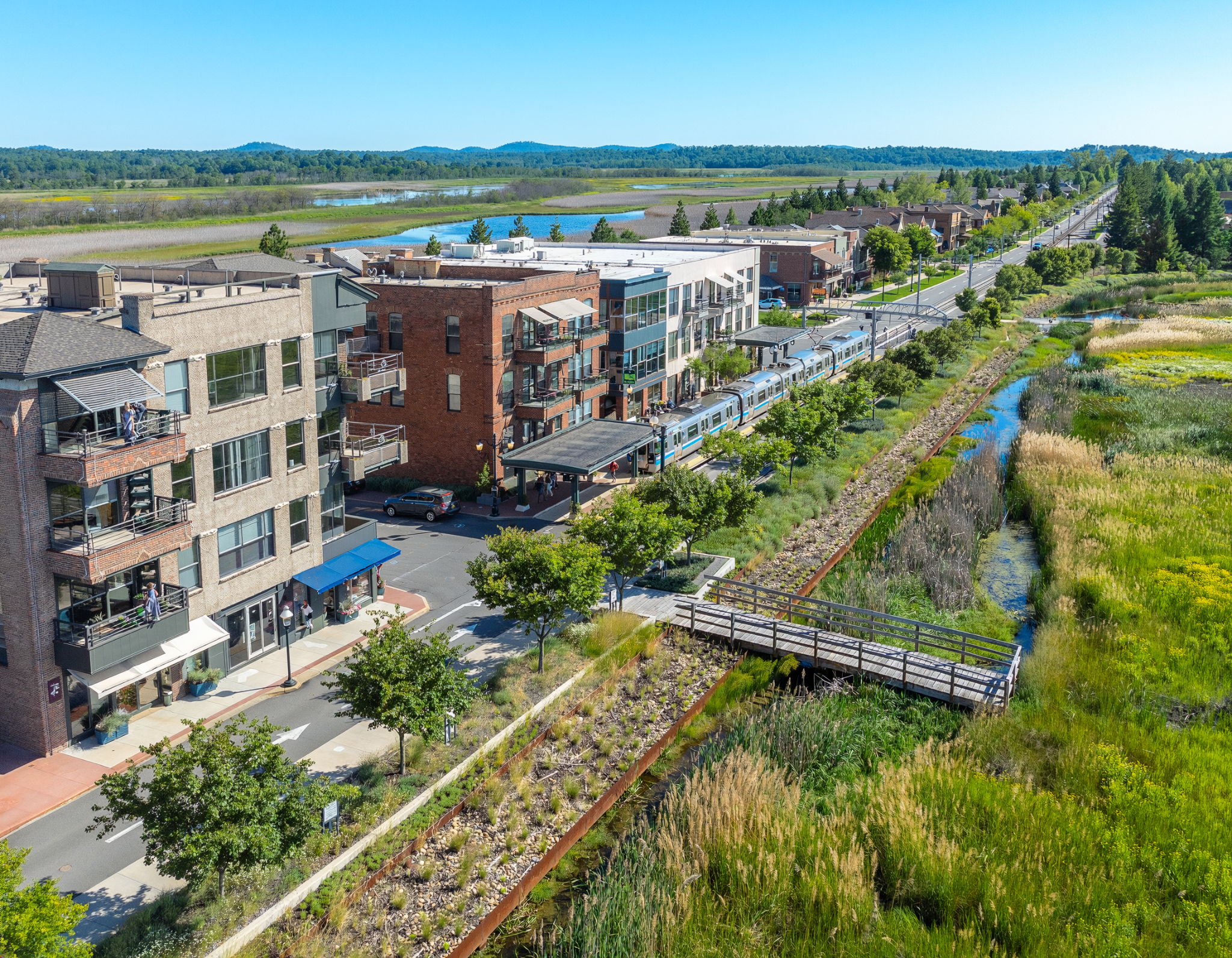
In the built environment, urban forests do not exhibit the seamless biophysical connectivity found in wild, hinterland ecosystems; instead, they are highly fragmented by roads, buildings, and utility corridors (MDPI, 2010). Integrated forest management acts as a structural methodology to overcome this fragmentation. By intentionally designing green and blue corridors, planners can merge urban forestry with sustainable drainage networks and structural building envelopes (Oppla, 2020).
Ecosystemic data managed via platforms like Oppla shows that preserving complex forest structures—such as standing deadwood, large seed-producing trees, and varying canopy heights—is critical to sustaining local biodiversity across multiple taxonomic groups (Oppla, 2026). When integrated directly into municipal zoning plans, these structural forest characteristics do more than provide habitats; they work as engineering assets that improve structural cooling and lower energy consumption in adjacent buildings (MDPI, 2010).
[Fragmented Urban Grid] ──> [Integrated Forest Corridors] ──> [Resilient Built Environment]
(Grey Infrastructure) (Multi-Functional Forest Assets) (Microclimate & Runoff Control)
Mitigating Compounding Risks Through Ecosystemic Methods
A primary focus of integrated forest management in built environments is risk mitigation and climate adaptation. As urban sprawl encroaches upon natural boundaries, cities face cascading hazards, including severe flash floods and wildfires (Oppla, 2020). Ecosystemic research demonstrates that unmanaged or poorly structured woodlands can amplify risks; for instance, unmanaged timber debris near bridges can create massive wood jams during intense rainfall events, worsening local flood zones (Oppla, 2020).
Through the application of IFM methods, watershed and forest management are synchronized. Comprehensive case evaluations, such as the Brague Catchment Case Study, demonstrate how quantifying the insurance value of nature-based solutions allows municipalities to invest in forest structures that reduce flood peaks and stabilize hillslopes. These integrated practices successfully protect downstream civil infrastructure while optimizing both green and grey engineering performance.
Overcoming Barriers to Knowledge and Co-Governance
The primary barrier to scaling integrated forest management within the built environment is not a lack of technical engineering capability, but rather a fragmentation of institutional knowledge (BioAgora, 2023). Translating ecosystemic data into actionable spatial policies requires robust cross-sector communication (European Commission, 2017).
Organized networks like BioAgora highlight that the flow of information between environmental scientists and municipal decision-makers must be amended to ensure biodiversity metrics are standard components of urban development. By establishing multi-stakeholder dialogue platforms and co-governance frameworks, cities can transition from static, piece-meal landscape management to adaptive, long-term ecosystemic models. Embracing an integrated vision for urban forestry ensures that managed canopies remain a cornerstone of resilient, climate-adapted built environments for future generations.
References
BioAgora. (2023). Connecting biodiversity knowledge and decision-making. https://bioagora.eu/storage/app/media/BioAgora_D1.1_final.pdf
European Commission. (2017). Development of a multi-stakeholder dialogue platform and Think tank to promote innovation with Nature-based Solutions. https://www.ec.europa.eu/research/participants/documents/downloadPublic?documentIds=080166e5bcdd47b1&appId=PPGMS
MDPI. (2010). Interpreting Sustainability for Urban Forests. Sustainability, 2(6), 1510-1536. https://www.mdpi.com/2071-1050/2/6/1510
Oppla. (2020). Brague DEMO: Flash flood and wildfire hazards in a Mediterranean catchment. https://oppla.eu/case-study/brague-demo-flash-flood-and-wildfire-hazards-mediterranean-catchment
Oppla. (2026). The relationship between forest structures and biodiversity in deciduous forests. https://oppla.eu/sites/default/files/2026-01/1-s2.0-S0378112725005808-main.pdf
Resilience Blog. (2021). Forests as critical infrastructure? Integrated Forest Management and recreation for forests and people. European Forest Institute. http://resilience-blog.com/tag/urban-forestry/