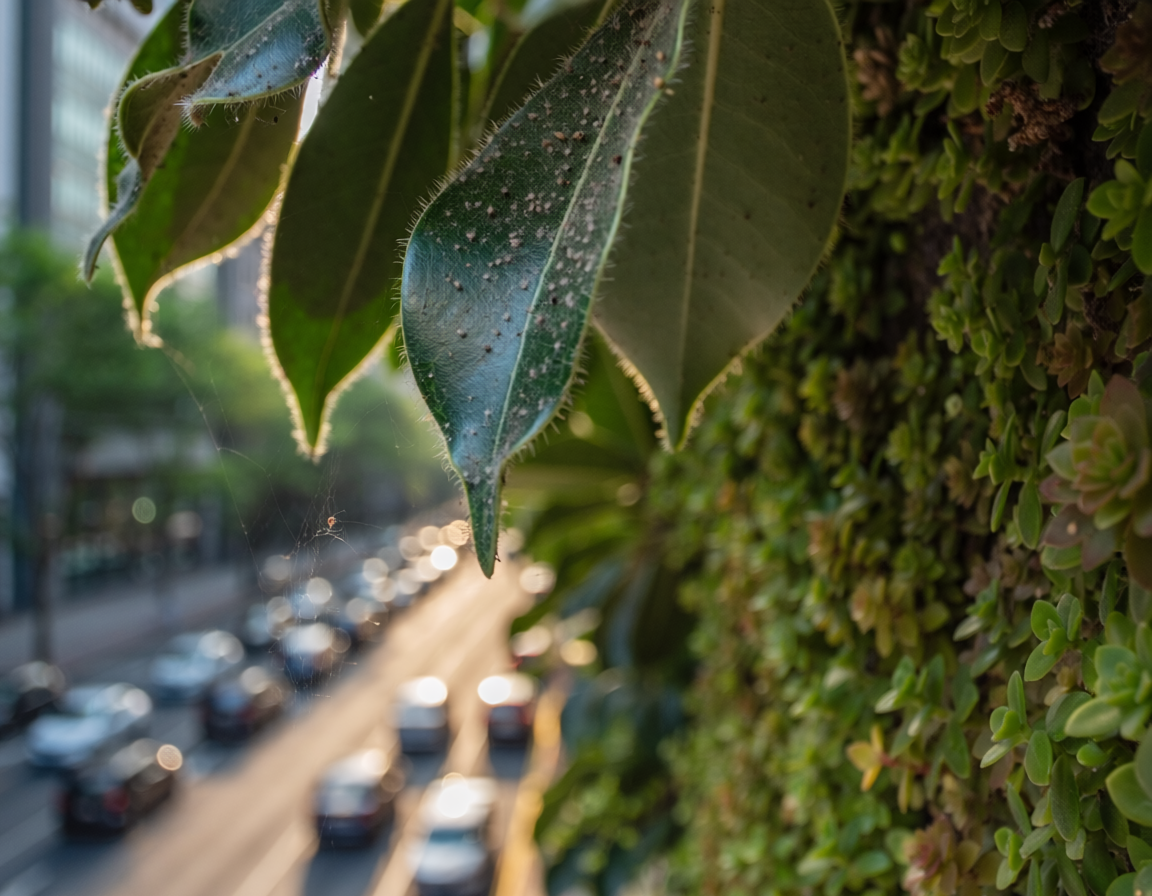
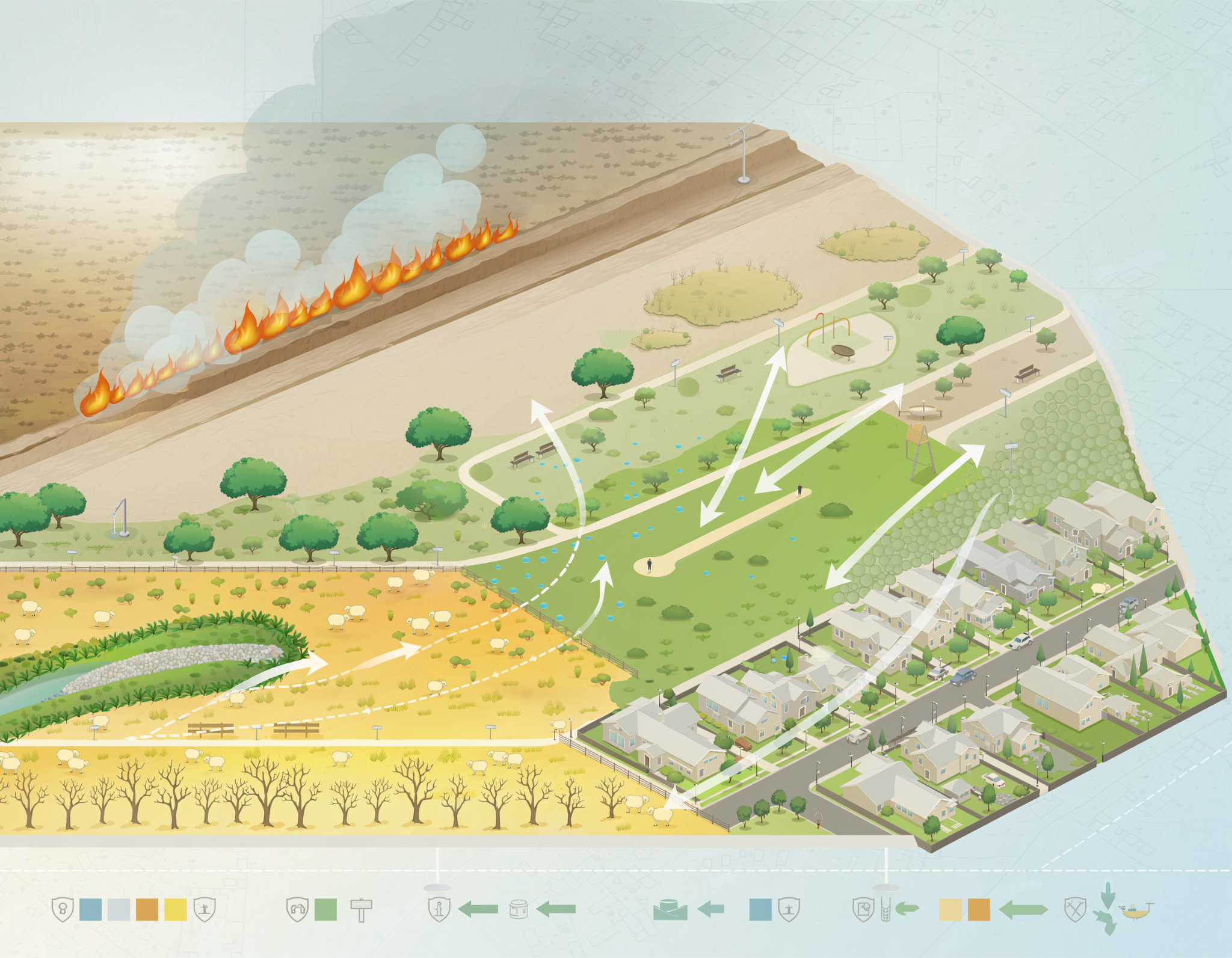
Urbanization and the continuous expansion of the built environment have fundamentally altered natural hydrological cycles. Traditionally, cities operate on a highly linear water paradigm characterized by large-scale water abstraction from regional aquifers or surface water bodies, followed by centralized treatment, contamination through use, and immediate disposal as wastewater discharge into downstream environments (Pearlmutter et al., 2021). This continuous and intensive abstraction stresses regional freshwater ecosystems, depletes groundwater reserves, and causes severe land subsidence.
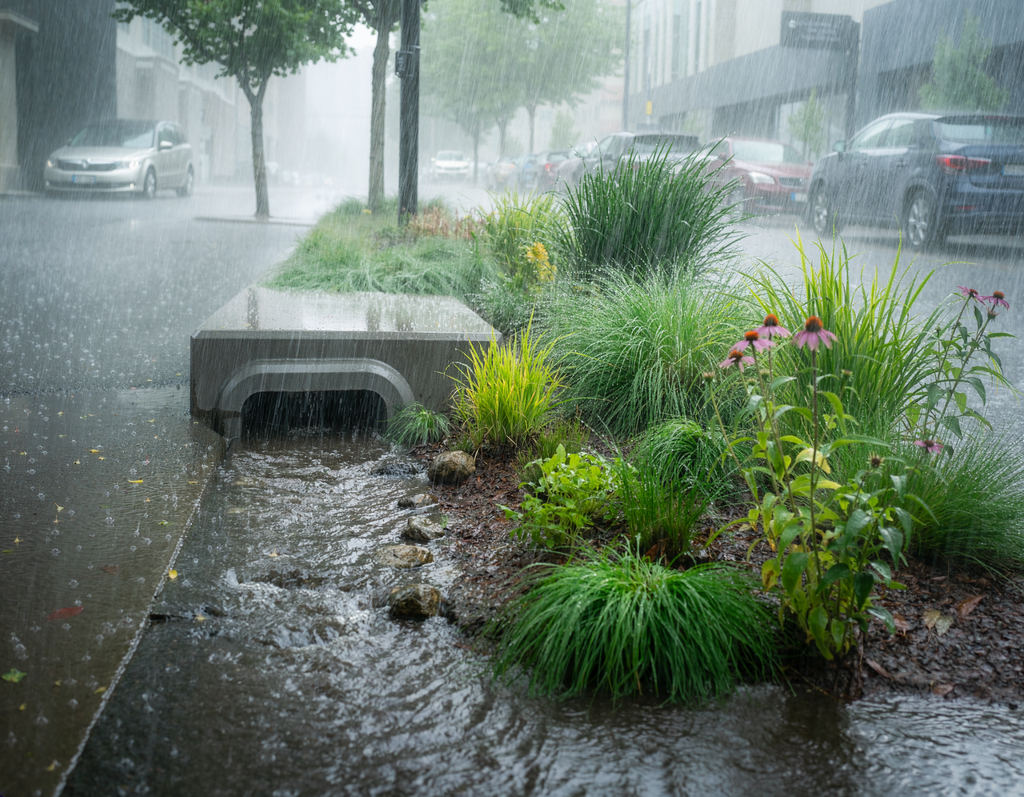
To mitigate these impacts, modern spatial planning and ecosystemic research are shifting towards Sustainable Urban Water Management (SUWM) systems (Hurlimann & Wilson, 2018). Knowledge platforms such as Oppla.eu—the European repository for Nature-Based Solutions (NbS)—actively promote frameworks where the built environment acts as a decentralized catchment and recycling system rather than a disruptive drain (Liu et al., 2021). By integrating ecological infrastructure into urban design, cities can dramatically reduce their reliance on raw water abstraction.
Innovative Circular Methods
Alleviating pressure on natural water bodies requires structural interventions at the building and district scale to capture alternative water matrices. Ecosystemic research identifies two dominant, scalable engineering interventions that change the infrastructure of water usage:
- Decentralized Rainwater Harvesting (RWH): Instead of allowing precipitation to fall onto impervious surfaces and turn into polluted stormwater runoff, architectural assemblies are adapted to collect water right where it lands.
- Greywater Co-Treatment Systems: Circular urban layouts isolate lower-risk wastewater (such as shower and sink drainage) and treat it directly on-site using biological mechanisms rather than routing it to energy-intensive chemical facilities (Pearlmutter et al., 2021).
The collected water is fed directly into localized Nature-Based Solutions units ($NBS\_u$), including vertical greening systems (VGS) and extensive green roofs. Advanced computational simulations across varying European climatic zones demonstrate that integrated vertical greening networks can successfully recycle between 44% and 100% of local roof runoff (Pearlmutter et al., 2021). Bridging dry winter or summer spells with treated greywater eliminates the need to draw from municipal clean water networks, effectively offsetting external abstraction requirements.
Ecosystemic Research and Recharge
When the built environment mimics natural landscapes through permeable urban open spaces, rain gardens, and infiltration swales, it generates critical regulating ecosystem services (Ahmad & Hassan, 2025). Traditional engineered cities seal the soil, preventing precipitation from filtering downward. Implementing decentralized NbS measures slows down stormwater velocities and naturally filters out pollutants, safely facilitating groundwater replenishment. This localized recharge counteracts the environmental deficits generated by historic urban abstraction. Case studies hosted across interactive platforms like Oppla highlight that utilizing collaborative frameworks to plan urban greening projects helps cities transition toward long-term water independence, balancing local socio-ecological needs with healthy regional hydrology (Voskamp et al., 2021).
References
Ahmad, N., & Hassan, Q. (2025). Ecosystem services linked to nature-based solutions for resilient and sustainable cities in India. Frontiers in Water, 6, Article 1504492. https://doi.org/10.3389/frwa.2024.1504492
Cited by: 18
Hurlimann, A., & Wilson, E. (2018). Sustainable urban water management under a changing climate: The role of spatial planning. Water, 10(5), 546. https://doi.org/10.3390/w10050546
Cited by: 97
Liu, H.-Y., Jay, M., & Chen, X. (2021). The role of nature-based solutions for improving environmental quality, health and well-being. Sustainability, 13(19), 10950. https://doi.org/10.3390/su131910950
Cited by: 149
Pearlmutter, D., Pucher, B., Calheiros, C. S. C., Hoffmann, K. A., Aicher, A., Pinho, P., Stracqualursi, A., Korolova, A., Pobric, A., Galvão, A., Tokuç, A., Bas, B., Theochari, D., Milosevic, D., Giancola, E., Bertino, G., Castellar, J. C., Flaszynska, J., Onur, M., . . . Gezik, V. (2021). Closing water cycles in the built environment through nature-based solutions: The contribution of vertical greening systems and green roofs. Water, 13(16), 2165. https://doi.org/10.3390/w13162165
Cited by: 87
Voskamp, I. M., de Luca, C., Polo-Ballinas, M. B., Hulsman, H., & Brolsma, R. (2021). Nature-based solutions tools for planning urban climate adaptation: State of the art. Sustainability, 13(11), 6381. https://doi.org/10.3390/su13116381
Cited by: 99